Soma Community Church

Gospel/ Family/ Mission

  • 10 Year Anniversary
  • New Here
    • FAQ/ Location
    • About Us
    • What We Believe
    • Our Leadership
    • Our Name
    • Affiliations
  • Get Involved
    • Baptism
    • Rooted (College Ministry)
    • Covenant Membership
    • Events
  • Blog
  • Sermons
  • Giving
  • Contact Us

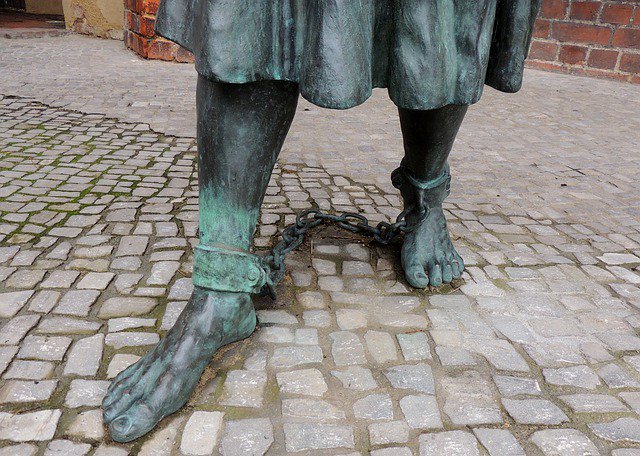
Should Christians celebrate Juneteenth?

“Anytime, anytime while I was a slave, if one minute’s freedom had been offered to me, and I had been told I must die at the end of that minute, I would have taken it—just to stand one minute on God’s earth a free woman—I would.” – Elizabeth Freeman (also known as Bet or MumBet, was the first enslaved African American to file for and win a freedom suit in Massachusetts.)

During the Civil War, President Abraham Lincoln issued the Emancipation Proclamation on September 22, 1862, with an effective date of January 1, 1863. It declared that all enslaved persons [only] in the Confederate States of America in rebellion and not in Union hands were to be freed.  There is no one reason why there was a 2½-year delay in letting Texas know about the abolition of slavery in the United States. Some accounts place the delay on a messenger who was murdered on his way to Texas with the news, while others say the news was deliberately withheld. Despite the delay, slavery did not end in Texas overnight, after New Orleans fell, many slavers traveled to Texas with their slaves to escape regulations enforced by the Union Army in other states.  [Read more…]

Saying “N****r” shouldn’t get Paula Deen fired

**I try hard not to speak about current events as anything but an observer, but this one has just become out of control. So this week I want to comment on the Paula Deen debacle and lend some clarity.

Warning, there maybe some language in this post that could be considered offensive.**

I have a guilty pleasure, cooking shows. I love “the Food Network (FN)”, “Top Chef” and others. I have learned so much that has served to advance my cooking skills. Paula Deen has been among the host that have given me a better understanding of Southern culture and cooking. I was initially surprised as the next person to hear of Mrs. Deen’s comments, use of the word “Nigger” and subsequent firing by the FN and other sponsors. What further concerned me was the instant “I support Paula Deen” Facebook pages and multiple post showing support for a women who used a word that, as a society, we have considered repugnant for many decades (though in my humble opinion not long enough). Additionally, I began to laugh when I read post from my friends comparing Deen’s situation to movies that say “Nigger” or “nigga (not that this word is much better)” a ridiculous amount of times (e.g. Django Unchained). I truly believe that Paula Deen should not be fired for admitting that she called someone a nigger 30 years ago but you should really read the deposition for yourself. The whole thing is now out and it is a pretty long read and damning read, here are some of the highlights (lowlights) and why I believe she was really fired.

  • She was accused (in a lawsuit) of only hiring only Caucasians to work in the front of the restaurant:

“Bubba [her brother] and I, neither one of us, care what the color of your skin is or what is between your legs, it’s what’s in your heart and in your head that matters to us.”

  • The transcript mentions employee complaints about Deen’s brother looking at pornography at the restaurant during operating hours and forcing other employees to look at it as well. In direct response to questions about this, Deen said:

“I know all men in my family at one time or another, they’ll tell each other, ‘look what so and so sent me on my phone,’ you know. It’s just men being men.”

  • In response to questions about whether or not she’d have a problem with her brother looking at porn at work, Deen said:

“If somebody sent him something and he pulled it up and looked at it, no, I would not persecute him for that. … Bubba, I don’t think, would ever do that if he thought there was somebody in the room that he — it would insult.”

  • She did respond to a question about when it’s acceptable to use the N-word and Deen said:

“We hear a lot of things in the kitchen. Things that they — that black people will say to each other.  If we are relaying something that was said, a problem that we’re discussing, that’s not said in a mean way.  What about jokes, if somebody is telling a joke that’s got —It’s just what they are, they’re jokes.”

The continuation of this line of questioning is rather disturbing.  Even Macklemore and Eminem understand that in today’s America there is not a nice way to call a African American a nigger, yet Deen proceeded to find that medium.  This her response to the lawyer asking her to give and example of how to use the word nigger in a nice, joking way after she state that she could:

“That’s — that’s kind of hard. Most — most jokes are about Jewish people, rednecks, black folks. Most jokes target — I don’t know. I didn’t make up the joke, I don’t know. I can’t — I don’t know.”

There is not a nice way to tell a joke with the word “nigger” in it, trust me I have heard my fair share and not one of them is funny.

  • The most repugnant part of the deposition was Deen’s description of a “[pre] Civil Wars style Southern plantation wedding” she wanted for her brother.  She was reportedly inspired by a restaurant with nicely dressed, middle-aged black waiters dressed up as slave caricatures. When asked by the questioner in the deposition whether the race of the waiters mattered, Deen said, “Well, that’s what made it.”  the very suggest that slaves could be a quaint scenic touch at a wedding is deplorable to say the least.

Listen, if you really want to please go and read the whole deposition .  After i did I came to the to the conclusion that as a private company I would not want someone who acts in the manner that she has and continues to defend it to represent my company.  What about forgiving and forgetting? Honestly, I am all for forgiving but I also understand that we all must deal with the consequences of our actions (good or bad) and unfortunately we must let Mrs. Deen and her brother walk that path.  She is a public figure and she has to deal with this publicly.  If you want to talk about the numbers of celebrities, actors, pastors, politicians of all races that make stupid comments I will submit that you are deflecting from the real reason for her release and ask you to please read the deposition.

As I began I really meant what I said, I do not think she should be fired for calling a robber a nigger 30+ years ago while working at a bank but I the more I dig I see a national and cultural conversation that need to happen, especially within the church.  I think another blogger said it the best when she said, “If our country ever wants to heal from the racism of our past, [we have] to stop denying that it’s still an issue. We need to own it. To step up and start a national conversation about race. That starts by being honest.”

Honestly, these are just my thoughts and opinions, what say you?  I look for ward to the conversation!

Please like this post and share it on Facebook and/or Google + and follow me on Twitter

O death, where is your sting?

This last week has been a very interesting one in regards to life and death. I have watched a young mother pass on to glory leaving behind a newly single father and 2 young children (4 and 1).  This one particularly hit home as we tried to explain to our 4 yr. old what happened to her friends mother.  Additionally, that same husband lost his father not 24 hrs before. Though we as a church family grieve for and with him I will not even try to act as if i understand what pain he is experiencing.  It seemed as if everywhere I looked there was death

  • My best friend’s Grandmother
  • Margaret Thatcher
  • Pastor Rick and Kay Warren’s son committed suicide
  • and many more…

This week in funerals and Memorial services all over the world pastors and friends will say:

“O death, where is your victory? O death, where is your sting?” – 1 Corinthians 15:55 (Hosea 13:14)

Like me we may be a bit confused by this reference but I think that there are a few few answers:

  1. Death’s [temporary] victory and [momentary] sting is evident in this moment, but, eternity is a reality.  Everyone is going to die and spend eternity somewhere and there is amazing peace when you know that someone you loved has been made new and is in the presence of Christ. and the victory and sting of death are gone.
  2. Everyone grieves differently and grief is a very natural and perfectly acceptable thing for us as humans to feel.   However, as there is a season for everything  we cannot allow the death of someone we love to rob me of the life that we have left.  We will always feel a deep sense of loss in regards to our loved one but grief is not a place for me to stay but rather a season I must go through Also, know and understand there IS joy on the other side.  (1 Thessalonians 4:13)
  3. If Romans 8:26 – 30  is true even when I don’t feel it then we must rest in our Father’s will. I have said before  and I will say it again, “maturity in a believer is marked by our choice to trust what God’s Word says rather than the way we feel.”  Doing this is not always the easiest thing but the FACTS of God’s Word are way [much] more reliable than my feelings.  This has been a struggle for me when I have lost loved ones but at the end of the day I know God is still God and God is still good.
  4. Relationships with other people should never be taken for granted.   We should never assume that people know how we feel about them and if there is someone in you love in your life you should do all that you can do to make that relationship right. You may need to stop reading right now and call someone who just came to your mind. Your life is too short to live with bitterness and regret.
  5. Community: Family (immediate and extended), friends, a local church.  This world will crush someone who tries to face it alone and one of the Bible’s core values is simple, we cannot do life alone.  This will never become more evident than when you lose someone you love and are desperate.

These are only a few of my thoughts on death and I’m sure throughout the week I might add others but I would love to know what you think/ experience when you come face to face with death.

A knock at midnight

On February 4, 1968, these resounding words were heard at the Ebenezer Baptist Church in Atlanta, Georgia:

If any of you are around when I have to meet my day, I don’t want a long funeral. And if you get somebody to deliver the eulogy, tell them not to talk too long… Tell them not to mention that I have a Nobel Peace Prize—that isn’t important. Tell them not to mention that I have three or four hundred other awards—that’s not important. Tell them not to mention where I went to school… say that I was a drum major for justice. Say that I was a drum major for peace. I was a drum major for righteousness. And all of the other shallow things will not matter.  I won’t have any money to leave behind. I won’t have the fine and luxurious things of life to leave behind. But I just want to leave a committed life behind.  And that’s all I want to say.

Today, is the birthday of a man who so eloquently spoke those words.  I wanted to honor his memory, his trials, his triumphs, and his accomplishments.  The reluctant dreamer who dared to speak out against injustice, who dared to trod into hostile and violent territories for [racial] equality, who dared to preach hope for the hopeless.

Rev. Dr. Martin Luther King Jr. delivered many speeches and sermons in his short time in the national spotlight. Certainly, his words will be forever enshrined in print, audio, and even electronic materials. I have been to the mountaintop, I Have a Dream, Beyond Vietnam, How Long Not Long, are only a few titles was well known speeches and sermons delivered by him.  Each of them are inspiring with a very sharp edge if you are paying attention.   I think about the world in which we now live – some 84 years after his birth – there is one speech by Dr. King is both timely and powerful.
The sermon was called “A Knock at Midnight” and it is about the parable in Luke 11:5-6 where a lonely traveler knocks at someone’s door around the midnight hour to ask for food for a friend. What would you do? Dr. King says,

“It is also midnight within the moral order. At midnight colors lose their distinctiveness and become a sullen shade of gray. Moral principles have lost their distinctiveness. For modern man, absolute right and wrong are a matter of what the majority is doing. Right and wrong are relative to likes and dislikes…”

In listening to the words of this sermon,  I could not help but think  how prophetic he was.  His words are still very relavent today and I want to leave you words he spoke that night that should stir something deep within our souls today.

If the church does not recapture its prophetic zeal, it will become an irrelevant social club without moral or spiritual authority….But if the church will free itself from the shackles of a deadening status quo, and, recovering its great historic mission, will speak and act fearlessly and insistently in terms of justice and peace, it will enkindle the imagination of mankind and fire the souls of men, imbuing them with a glowing and ardent love for truth, justice, and peace.

Listen to the full sermon here or watch a clip below

[youtube=http://www.youtube.com/watch?v=0JFLjwAYHks]

the Gospel

“Now I would remind you, brothers, of the gospel I preached to you, which you received, in which you stand, and by which you are being saved, if you hold fast to the word I preached to you—unless you believed in vain. For I delivered to you as of first importance what I also received: that Christ died for our sins in accordance with the Scriptures, that he was buried, that he was raised on the third day in accordance with the Scriptures . . .”

–1 Corinthians 15:1–4

What is the Gospel? The word gospel simply means “good news.” The central message of the Bible is the gospel, or good news, about the person and work of Jesus Christ. In 1 Corinthians 15:1–4, Paul provides the most succinct summary of the gospel: the man Jesus is also God, or Christ, and died on a cross in our place, paying the penalty for our sins; three days later He rose to conquer sin and death and give the gift of salvation to all who believe in Him alone for eternal life.  That is it!

Martin Luther rightly said that, as sinners, we are prone to pursue a relationship with God in one of two ways. The first is religion/spirituality and the second is the Gospel. The two are antithetical in every way.

Religion says that if we obey God He will love us. The Gospel says that it is because God has loved us through Jesus that we can obey.

Religion says that the world is filled with good people and bad people. The Gospel says that the world is filled with bad people who are either repentant or unrepentant.

Religion says that you should trust in what you do as a good moral person. The Gospel says that you should trust in the perfectly sinless life of Jesus because He alone is the only good and truly moral person who has and will ever live.

The goal of religion is to get from God such things as health, wealth, insight, power, and control. The goal of the Gospel is not the gifts God gives, but rather God as the gift given to us by grace.

Religion is about what I have to do. The Gospel is about what I get to do.

Religion sees hardship in life as punishment from God. The Gospel sees hardship in life as sanctifying affliction that reminds us of Jesus’ sufferings and is used by God in love to make us more like Jesus.

Religion is about me. The Gospel is about Jesus.

Religion leads to an uncertainty about my standing before God because I never know if I have done enough to please God. The Gospel leads to a certainty about my standing before God because of the finished work of Jesus on my behalf on the cross.

Religion ends in either pride (because I think I am better than other people) or despair (because I continually fall short of God’s commands). The Gospel ends in humble and confident joy because of the power of Jesus at work for me, in me, through me, and sometimes in spite of me.

HT: Mars Hill (Seattle)

He could have let me drown

Gospel music can be an extremely broad term.  Most of the attention is focused on music that sprung from the early African-American church and inspired a host of modern day choirs and contemporary gospel/R&B sounds.  [Black] Gospel Music and soul music are inextricably linked from the smooth sounds of Sam Cooke to the dancing, acrobatic vocals of Kirk Franklin, gospel music does more than just sound sweet–it literally moves its listeners. Whether it’s swaying with the choirs, tapping along with the quartets, or simply raising hands to the rhythm of soul-stirring crooners, gospel is one genre of music that needs to be both seen and heard. Once narrowly defined as religious, gospel has transcended those limits to become a profound force in American music and popular culture.

Gospel music has a history which can be traced to the 18th century.  During this time, hymns were lined and repeated in a call and response fashion and the spirituals/ work songs came on the scene.  Enslaved Africans attended their masters’ worship services, which was the main influence on spirituals and work songs.  At these services they would grow closer in their understanding of Christian doctrine and role that music played in that experience. The worship music (hymns) of the masters became the backdrop for the music the enslaved Africans would use at their eventual worship meetings. As we listen to gospel music today with its sometimes downtrodden themes, it continues to be curious how such beauty and richness can emanate from troubled times.

In the tradition of the [black] church, call and response in singing and in speaking has been and continues to be a foundation on which the gospel is delivered. Through this participatory delivery system beliefs are reinforced. There is an expectation that when there is agreement with either the spoken word or song because of either its content or its contexts that verbal affirmation will be given. Those who are witnessing, speaking, or singing are encouraged by the responses and those who are about to experience issues are empowered to be victorious.

Gospel music can stir many different emotions. The audience for this spiritually moving idiom continues to grow as do the types of venues where it can be heard.  Gospel singers and listeners, making a joyful noise to the Lord is what the music is about and it invites the participation of all to come together, honor the past, look forward to the future, and through song, renew our faith.

Check out a great example below:

[youtube=http://www.youtube.com/watch?v=t3L1mXV8UUA]

  • 1
  • 2
  • Next Page »

Soma Community Church

804 Fairmount Blvd
Jefferson City, MO 65109
(573) 635-4832

Click Here for Mailing Address

Get Connected

  • 10 Year Anniversary
  • New Here
    • FAQ/ Location
    • About Us
    • What We Believe
    • Our Leadership
    • Our Name
    • Affiliations
  • Get Involved
    • Baptism
    • Rooted (College Ministry)
    • Covenant Membership
    • Events
  • Blog
  • Sermons
  • Giving
  • Contact Us

Copyright © 2025 ·SOMA Community Church · Website by Megaphone Designs