Soma Community Church

Gospel/ Family/ Mission

  • 10 Year Anniversary
  • New Here
    • FAQ/ Location
    • About Us
    • What We Believe
    • Our Leadership
    • Our Name
    • Affiliations
  • Get Involved
    • Baptism
    • Rooted (College Ministry)
    • Covenant Membership
    • Events
  • Blog
  • Sermons
  • Giving
  • Contact Us

Advent Week 4: Resurrection

In [arguably] the worst moment in [major] movie history happened in 1996  as I sat in a movie theatre with my girlfriend and while watching “Jerry McGuire” with her.  The movie climaxed when Tom Cruise burst into his wife’s home, looked into her eyes and said the famous words, “You complete me.” (watch here) If you remember Cruise had just experienced the height of his professional career only to find out it was not what he had expected. He expected joy and found loneliness. He expected fulfillment and found emptiness. He was a man in the throes of finding out that what he had always pursued was not what he truly needed or desired.

Maguire was right about one thing: Incompleteness marks our current life. No matter how hard we try, fulfillment is always just out of reach. For unbelievers, the pursuit of fulfillment will feel like eternally chasing a moving target until Jesus becomes the object of their longing. However, even for the believer, there is a real sense that we have not found what we are looking for.

Completion is only found in Christ, through His death for our sin and resurrection from the grave, but it’s not a complete reality until we stand in our resurrected bodies in the presence of our Savior. This won’t happen until Jesus’ words in Matthew 24 come to pass: “They will see the Son of Man coming on the clouds of heaven with power and great glory.” The return of Jesus and final restoration are the human hope, nothing less.

Suffering is not eternal, but the glory upon which we wait is. Jesus is going to return, and when He does, we will share in the fullness of His glory. When we do, the text says we will experience two things: adoption as sons, which is the redemption of our bodies, and a new earth free from the weight of sin. Since the text says creation is waiting to “obtain the freedom of the glory of the children of God,” these are not separate statements but one united reality that will take place when the glorious trumpets sound and the Servant returns as King.

As we wait for this day, incompleteness defines our lives because we live as adopted children who have not yet been picked up by our parents. We know our parents’ names, know they have paid for our adoption, know the adoption has been approved but stand on the curb with bags packed waiting on them to come and tell us, “You’re home.” This is true for all believers from all centuries. Those living today and those who have entered the presence of the Lord await the completion of our adoption in the redemption of our bodies.

This is the Christian hope into which we were saved. We know that Jesus has already paid for our adoption, but we wait for the Father to send Him for us to renew our home and dwell among us eternally as we experience our resurrected bodies and the fullness of His glory. This is a salvation about so much more than just “going to heaven when we die.” This is restoration, redemption and renewal. This is going from enemies of God to sons and daughters of God, co-heirs with Christ. This is living fully in the image of God the way He intended. Oh what a day that will be. Come Lord Jesus, come.

Until Christ’s return, Paul gives us an example of how to groan in view of eternity. He exemplifies how to view the hardships of a fallen world through the lens of the eternal glory we await. To live in light of eternity does not mean demotions and cancer are not painful. It means they are not crushing. Cancer is painful because death is the last enemy to be conquered, but it’s not crushing because it’s only a matter of time before our resurrection conquers all disease. It means that loneliness is not something only our single brothers and sisters experience. We all experience loneliness because marriage is not the solution to the human condition. It’s a gift and an image that represents the substance for which we all long.

The substance that brings fulfillment and ends loneliness is standing face to face with our beloved, Jesus Christ. To stand face to face, two things must take place: He must return, and our flesh must be the redeemed, resurrected body to come. When fully grasping our hope, we can endure any suffering because we know it is temporary, and the glory to come is eternal. Until that day, we strive for a steadfast hope, we wait with patience, and we stand confident that our Savior will appear to bring completion to the adoption we long for.

This is Resurrection…

Advent Week 3: Incarnation

At one point in history, God made a promise that became a reality in the coming of Christ. His coming is known as the Incarnation in which He took on human flesh to rescue humanity through His life, death and resurrection (aka the Gospel). The Incarnation and its impact on us are the focus of our time this week, and I want to look at it through the lens of John 1.
In the beginning was the Word, and the Word was with God, and the Word was God. He was in the beginning with God. All things were made through him, and without him was not anything made that was made. In him was life, and the life was the light of men. The light shines in the darkness, and the darkness has not overcome it…And the Word became flesh and dwelt among us, and we have seen his glory, glory as of the only Son from the Father, full of grace and truth.

JOHN 1:1-5; 14

John opens his Gospel with the same three words Moses opened with in Genesis: “In the beginning.” This isn’t accidental or insignificant; rather, it is intentional and profound. What makes this breathtaking is that John’s “In the beginning” refers to a time before Genesis 1:1. As you read the rest of John 1:1, it becomes clear that he is referring to the origin of history before creation, when God and “the Word” existed eternally face to face. Then, when the Father decided it was time to create, it was the Word Who spoke creation into being. Through the Word, God brought into existence what had not previously existed.

The eternal Word “became” a man named Jesus. He Who eternally existed as God became human for humanity’s redemption. In this, He did not cease to be God. He came as fully God and fully man – on a mission of grace and truth, reflecting the glory He shared with the Father to the blind and broken world.

It’s about God Who became man in pursuit of you. He came to reveal the glory of the Father through your redemption, but this redemption did not come without a price.

The price paid is known and cherished as the gospel, and 1 Corinthians 15 puts it as straight forward as any passage: the gospel is the death, burial and resurrection of Jesus according to the Scriptures for the forgiveness of sin. Christ’s death on the cross absorbed the weight of God’s wrath against sin, thus displaying eternal glory, and Christ’s resurrection proclaimed victory over death. This gospel is the fulfillment of the promise God spoke through the prophets of old. God is reliable because the plan of salvation revealed in the Old Testament did not begin in the Old Testament. Salvation through Jesus Christ was not a reaction to sin entering the world. God’s redemptive purposes are rooted in eternity. Salvation through Jesus Christ is an eternal plan that began even before “In the beginning,” which brings us back to John 1.

As Jesus was sent to humanity with a mission, we are sent to humanity to carry out His mission. We have been sent to “incarnate” into our cities and through our jobs, homes, coffee shops, homeless shelters, etc. We are to integrate counter-cultural living into our city. Jesus shows us that neither of these implications can be taken in isolation. Rather, our holiness is stirred up by our mission, and our mission is accomplished in our holiness. This is the mission of the bride of Christ in the joy of Christ until the day we walk by sight and not by faith.

This is incarnation…

Advent Week 2: Patience

Scripture, in its most intriguing portions, often introduces an obscure character, gives him or her something profound to say or do, only to let that person mysteriously vanish from the text verses later.

Simeon (Luke 2: 25-35) was one such shady figure, known only by his righteousness, devotion and apparent long-suffering for Israel’s consolation. Imagine him as a gray-bearded saint full of the Spirit, groaning continually in the temple, waiting for Messiah. Perhaps he’d stand post on the steps, looking out over the horizon, looking for a sign.

He certainly wasn’t alone in his waiting. Countless others – the people of God from old – shared his anxious anticipation, and we can also sympathize. Most of us know the feeling well – desire builds when offered something spectacular, the prospects of some grand fortune, the opportunity to embark on some adventurous expedition, or the potential satisfaction of some unrequited love (for me it was college). Each new kernel of hope, the feeling swells in your heart. The uneasiness expands in your stomach. You know this feeling and Israel lived on the edge of their seats and in that reality, always looking out over the horizon.

The Prophets were to blame. Their continual reminders, their fanning the flame was necessary but agonizing. Certainly, we might think that the gods and goddesses of neighboring tribes could have consoled Israel. But how great was Israel’s need – sins too many to atone with burnt sacrifices, oppression too heavy from violent enemies, shame too penetrating and peace so out of reach. Israel needed a Messiah, so they waited while the Prophets poked and prodded.

To those who longed to be righteous, Jeremiah thundered:

Behold, the days are coming, declares the LORD, when I will fulfill the promise I made to the house of Israel and the house of Judah. In those days and at that time I will cause a righteous Branch to spring up for David, and he shall execute justice and righteousness in the land. In those days Judah will be saved, and Jerusalem will dwell securely. And this

is the name by which it will be called: ‘The LORD is our righteousness.

JEREMIAH 33:1416

The children of God rose in agreement….

To the oppressed who cried out for justice, Malachi encouraged:

And the Lord whom you seek will suddenly come to his temple; and the messenger of the covenant in whom you delight, behold, he is coming, says the LORD of hosts. But who can endure the day of his coming, and who can stand when he appears? For he is like a refiner’s fire and like fullers’ soap. He will sit as a refiner and purifier of silver, and he will purify the sons of Levi and refine them like gold and silver, and they will bring offerings in righteousness to the LORD. Then the offering of Judah and Jerusalem will be pleasing to the LORD as in the days of old and as in former years. “Then I will draw near to you for judgment. I will be a swift witness against the sorcerers, against the adulterers, against those who swear falsely, against those who oppress the hired worker in his wages, the widow and the fatherless, against those who thrust aside the sojourner, and do not fear me, says the LORD of hosts. MALACHI 2:173:5

The children of God held their breath….

To those who needed freedom from shame, Zephaniah offered:

Sing aloud, O daughter of Zion; shout, O Israel! Rejoice and exult with all your heart, O daughter of Jerusalem! The LORD has taken away the judgments against you; he has cleared away your enemies. The King of Israel, the LORD, is in your midst; you shall never again fear evil. On that day it shall be said to Jerusalem: “Fear not, O Zion; let not your hands grow weak. The LORD your God is in your midst, a mighty one who will save; he will rejoice over you with gladness; he will quiet you by his love; he will exult over you with loud singing. I will gather those of you who mourn for the festival, so that you will no longer suffer reproach. Behold, at that time I will deal with all your oppressors. And I will save the lame

and gather the outcast, and I will change their shame into praise and renown in all the earth. At that time I will bring you in, at the time when I gather you together; for I will make you renowned and praised among all the peoples of the earth, when I restore your fortunes before your eyes,” says the LORD. ZEPHANIAH 3:1420

The children of God let out a hopeful cry….

To all who waited for peace and security, Micah submitted:

Now muster your troops, O daughter of troops; siege is laid against us; with a rod they strike the judge of Israel on the cheek. But you, O Bethlehem Ephrathah, who are too little to be among the clans of Judah, from you shall come forth for me one who is to be ruler in Israel, whose coming forth is from of old, from ancient days. Therefore he shall give them up until the time when she who is in labor has given birth; then the rest of his brothers shall return to the people of Israel. And he shall stand and shepherd his flock in the strength of the LORD, in the majesty of the name of the LORD his God. And they shall dwell secure, for now he shall be great to the ends of the earth. And he shall be their peace. MICAH 5:15

The children of God waited and waited, only to eventually rise again in agreement, hold their breath, and let out a hopeful cry. This continued for years.

This is the unsettling spirit of Advent, expectant waiting and preparation for the coming Christ, the consolation of God’s people. Take some time to reflect personally on the bitterness and the sweetness of waiting.

This is patience…

Advent week 1: Hope

Expectations are powerful. We long to trust possessions, people and ideas with our hope – hope of something greater than what we currently have. Relationships, careers and entertainment willingly receive our expectations. To the degree that we think each will deliver, anticipation grows inside of us. The voice of childhood may change tone through the years, but the same gut response comes with every disappointment:

“But you promised…”

It might not be said so plainly, but our confidence shifts as the desired object escapes our fingertips. Impatience replaces anticipation. Unrest and discontentment rise up to our defenses, while our greatest need seems too simple – perspective.

God makes promises to His people throughout the Old Testament.

  • A rainbow appears as a promise that the flood was a one-time deal.
  • God promises deliverance and spares an entire generation of Israel during Passover and with it preserves the joy of each father in holding his firstborn son.
  • David sleeps on cave floors, hunted by Saul, and God delivers him.

Our Father is a promise-making and promise-keeping God.

There are also those who longed for the fulfillment of promises yet could only cling to the promises themselves. For days, weeks, months and years, these people waited. Genesis speaks of Abraham and Sarah who, with Abraham in his 80s, had no child. Their hopes and expectations belong to any would-be parent: a sign of the future, the joy of parenting, but the next generation absent. Along with Abraham and Sarah, the people of Israel knew a collective experience of waiting. God promised a Messiah, a Deliverer, an anointed King. Days turned into months and seasons into years. God’s people often waited and trusted with patience and hope.

We often create our own expectations. What we want or think we deserve leaves us discontent, disillusioned, even resentful when it does not come. These feelings live in deep and powerful places within our souls and can begin to define us.

None of us escape this pain, this fear that if we love something enough God will take it away from us, as if He is vengeful and plays games with His children. We trust the object of our expectations and set our expectations too low when they were meant to be occupied by Him, after all. What good thing would the Father withhold from us if He has given us His only Son? What more could capture our hearts than the Savior Himself and the knowledge that He died bound that we might live free?

Decades of wanting, years of promise, fitless starts and stops of patience – Abraham’s faith finds no greater description than where we read of father and son walking down the mountain together, leaving behind an altar that bears the name,“The Lord will provide.”

There is no more powerful expectation than patience in the promises of God, for He has provided the Lamb, and the Lamb is the coming King.

This is hope…

What is Advent?

Though you have not seen him, you love him. Though you do not now see him, you believe in him and rejoice with joy that is inexpressible and filled with glory, obtaining the outcome of your faith, the salvation of your souls. Concerning this salvation, the prophets who prophesied about the grace that was to be yours searched and inquired carefully, inquiring what person or time the Spirit of Christ in them was indicating when he predicted the sufferings of Christ and the subsequent glories. It was revealed to them that they were serving not themselves but you, in the things that have now been announced to you through those who preached the good news to you by the Holy Spirit sent from heaven, things into which angels long to look. Therefore, preparing your minds for action, and being sober-minded, set your hope fully on the grace that will be brought to you at the revelation of Jesus Christ.

1 PETER 1:8–13

Toward the end of the fourth century, the churches of the Western Roman Empire settled on December 25 as the date for God’s people to mark the birth of Christ. They also instituted Advent as a season of preparation leading up to the celebration of Christmas. Just as the fasting and humility of Lent precedes the celebration of Easter, the anticipation of Advent precedes the joy of Christmas Day.  The Advent season officially commences on the fourth Sunday (Advent Sunday) before Christmas and continues until Christmas Eve or Day. Various theological traditions celebrate the season through an array of customs.

 Advent, formed from a Latin word meaning “coming” or “arrival,” is about the coming of Christ. It’s the celebration of the first advent of Jesus and the anxious awaiting of His second. The season is a time for remembering and rejoicing, watching and waiting, and a time to reflect upon the promises of God and to anticipate the fulfillment of those promises with patience, prayer and preparedness.  In Advent, we press into the tension of “already but not yet.” We affirm that Christ has come, and we declare that he is coming.

Perhaps there is no more popular tradition associated with the season is the use of an Advent calendar to mark the month of December. Modern Advent calendars typically include 24 “windows” that are opened (one per day) to reveal a poem, portion of Scripture, story, picture or small gift. As more windows are opened, expectancy increases in awaiting the final day, which represents the first advent of Christ.

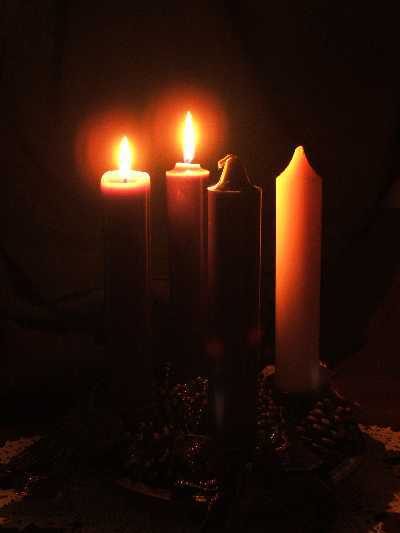
Another popular tradition involves the use of an Advent candle or candles. This symbolic tradition is borrowed from the emphasis throughout Scripture of Jesus Christ being the light of the world (Matthew 4:16; John 1:4-9, 8:12). Those using one candle burn a little each day to mark the progression of the season. Each day a bit more of the candle is burned to symbolize the anticipation of Christmas. Others use a wreath with five candles in the middle. Each week a new candle is lit in anticipation of the final lighting on Christmas Eve or Christmas Day.

Ultimately, the King is coming. Jesus Christ has come and will come again. This is the hope of the Church whom He purchased with His blood. It is the eager expectation and desire of His people. In His coming is our joy, for He is our treasure, our greatest good.

The Dead Church

While listening to Dr David Jeremiah over the last week I heard him reference a painting by Vincent Van Gogh one of my favorite artists.  Later on that day I overheard some associates at work discussing this same piece in reference to a Dr. Who (which is apparently epic) episode.  So in curiosity, and because I could not recall it immediately, I looked up the painting that was referenced and this is what I found.
If you are not familiar Van Gogh’s paintings are considered by many to be the epitome of Impressionism. 
I ran across this painting by Van Gogh today, and was not only struck by its beauty, but sensed something more in the symbolism of its colors and form, so I decided to do a little research.  Here’s what I found out:

Toward the end of his life, Vincent van Gogh succumbed to his mental illness, cut off his own ear after a fight with friend, and in May 1889 committed himself to a mental hospital in Saint Remy.

In the last 10 weeks of his life, while in the care of the doctor, he created over 100 pieces including The Church at Auvers (pictured), a scene from his youth created out of memory.

The foreground seems to be in daylight, whereas the church itself and the sky seem to be in shadow, nearly a night scene. The church’s form is distorted adding a feel of gloom to the scene. A church painted in this manner may reflect van Gogh’s feeling about the church and religion after his failed studies as a preacher and missionary.

One other site explains it this way:

Rather than the church looking like a place of refuge and solace, Vincent has shown it as a place of impending doom and gloom.

Early in his life, Van Gogh aspired to be a pastor and missionary.  However, he failed miserably at both callings and, even though there is no specific documentation about his spiritual crisis, it’s pretty safe to bet that he got turned off from religion because of his inability to “meet the expectations.”  Ironically, van Gogh committed suicide shortly after he painted this impression and The [actual] Church at Auvers refused to host Vincent’s funeral because he had killed himself.  His service took place across the river at Mery-sur-Oise the next day.

This is a sad story, and comes to life through this man’s paintings.  His life circumstance certainly colored his view of this grand edifice and I think it serves as a message to the church that needs to be heard today. A few things I notice about the painting are…

  1. The church dominates the canvas. Literally, there is no way to avoid it.
  2. There are two paths leading around the church – both happen to lead through the shadow of the church.
  3. Sadly, there is no door into the church.

I’ll leave it to you to generate your own conclusions about the message Van Gogh is sending us from 1890 I definitely have my own.  I’d love to hear what you think…

  • « Previous Page
  • 1
  • …
  • 7
  • 8
  • 9
  • 10
  • 11
  • …
  • 15
  • Next Page »

Soma Community Church

804 Fairmount Blvd
Jefferson City, MO 65109
(573) 635-4832

Click Here for Mailing Address

Get Connected

  • 10 Year Anniversary
  • New Here
    • FAQ/ Location
    • About Us
    • What We Believe
    • Our Leadership
    • Our Name
    • Affiliations
  • Get Involved
    • Baptism
    • Rooted (College Ministry)
    • Covenant Membership
    • Events
  • Blog
  • Sermons
  • Giving
  • Contact Us

Copyright © 2025 ·SOMA Community Church · Website by Megaphone Designs