Soma Community Church

Gospel/ Family/ Mission

  • 10 Year Anniversary
  • New Here
    • FAQ/ Location
    • About Us
    • What We Believe
    • Our Leadership
    • Our Name
    • Affiliations
  • Get Involved
    • Baptism
    • Rooted (College Ministry)
    • Covenant Membership
    • Events
  • Blog
  • Sermons
  • Giving
  • Contact Us

He could have let me drown

Gospel music can be an extremely broad term.  Most of the attention is focused on music that sprung from the early African-American church and inspired a host of modern day choirs and contemporary gospel/R&B sounds.  [Black] Gospel Music and soul music are inextricably linked from the smooth sounds of Sam Cooke to the dancing, acrobatic vocals of Kirk Franklin, gospel music does more than just sound sweet–it literally moves its listeners. Whether it’s swaying with the choirs, tapping along with the quartets, or simply raising hands to the rhythm of soul-stirring crooners, gospel is one genre of music that needs to be both seen and heard. Once narrowly defined as religious, gospel has transcended those limits to become a profound force in American music and popular culture.

Gospel music has a history which can be traced to the 18th century.  During this time, hymns were lined and repeated in a call and response fashion and the spirituals/ work songs came on the scene.  Enslaved Africans attended their masters’ worship services, which was the main influence on spirituals and work songs.  At these services they would grow closer in their understanding of Christian doctrine and role that music played in that experience. The worship music (hymns) of the masters became the backdrop for the music the enslaved Africans would use at their eventual worship meetings. As we listen to gospel music today with its sometimes downtrodden themes, it continues to be curious how such beauty and richness can emanate from troubled times.

In the tradition of the [black] church, call and response in singing and in speaking has been and continues to be a foundation on which the gospel is delivered. Through this participatory delivery system beliefs are reinforced. There is an expectation that when there is agreement with either the spoken word or song because of either its content or its contexts that verbal affirmation will be given. Those who are witnessing, speaking, or singing are encouraged by the responses and those who are about to experience issues are empowered to be victorious.

Gospel music can stir many different emotions. The audience for this spiritually moving idiom continues to grow as do the types of venues where it can be heard.  Gospel singers and listeners, making a joyful noise to the Lord is what the music is about and it invites the participation of all to come together, honor the past, look forward to the future, and through song, renew our faith.

Check out a great example below:

[youtube=http://www.youtube.com/watch?v=t3L1mXV8UUA]

Rob Bell is not a universalist…

Update: A careful and devastating review of Bell’s book can be read here (it is a PDF file).

Note: I’ve added an update at the end of this post.

… let me explain.  I know that many of you that read this blog are familiar with the name above.  As a college student I was first exposed to Rob Bell and his thought provoking questions through his Nooma videos and multiple books.  I remember when I first encountered Nooma I felt they were a breath of fresh air in what was (in my opinion) silly evangelical media.  I remember being taken back by his speaking ability, his thoughts, and his creativity.  Someone who thinks like me (way outside the box), is willing to challenge evangelical norms and not just accept what he was spoon fed.

I also remember when I was just beginning my theological education that multiple professors warned me about Rob Bell and other emerging types.  I heard them, but I defended him and others vociferously and for the most part most of the pastors and teachers I defended have proven to be extremely orthodox in their theology.

Well if you have not heard (or just don’t care) Rob Bell is in the center of a pretty large brouhaha about where he stands theologically.  Many people are throwing around the words “heretic”, and “universalist” and it is getting the attention of the likes of USA Today, Good Morning America, NY Times, CNN, Fox News and MSNBC.  Honestly, I think this is a good thing and not a bad one.

I also know many of us younger Christ followers barely have any stomach for controversy, let alone strong words about a serious topic.  If there is no way to be simultaneously bold and humble; if there is no way to be a gentle, caring person while still speaking in clear tones about hurtful error; if there is no way to correct those who oppose sound doctrine without being a moral monster; if there’s no way to love truth and grace at the same time, then there’s no way to be a biblical Christian.  Let me be clear, not every judgment is sinful and not every truth is cruel.

It seems that most people I talk have expierieced Rob Bell’s books and videos and this what makes this issue so pressing.  Clarity on the important issues he raises (and misunderstands) is absolutely necessary.  I think the clear and overwhelming rejection of Bell’s views by orthodox Christians (with very lengthy responses) indicates that this is clearly in error on several points.  I think Lisa Miller of Newsweek frames this whole brouhaha in a simple format when she asked Rob Bell in their interview, “Aren’t you just a mainline Protestant posing as an evangelical? Aren’t you just saying what Episcopalians have been saying for fifty or sixty years?” (Be sure to read the whole interview here. I don’t think he answers the question she asked, but his answers and ideas are worth reading)

Bell has largely recast and tweaked the view that many mainline Protestants have held for a hundred years: that because of God’s love, he saves everyone, regardless. This is not new. This is not groundbreaking. This is not revolutionary.  In many ways, Rob Bell’s Love Wins is simply mainline Protestantism with better haircuts and cooler music.

In the end Rob Bell is right about one thing: what you believe about heaven and hell says a lot about what you believe about God. That’s why theological error of this magnitude cannot go unchecked.

Checkout the video below for Rob Bell in his own words…

[youtube=http://www.youtube.com/watch?v=Vg-qgmJ7nzA]

Update: Based on some conversations I have had with friends I decided to clarify where I see Rob Bell standing in.  Rob Bell is not a Universalist.  He more clearly an “optimistic inclusivist” (some might say a “mostly” universalist or christian universalist, the latter is an oxymoron).  Either way clearly is not within the stream of orthodoxy but defiantly along the line of the early 20th century mainline denominations. A Universalist clearly states that they believe that regardless what someone believes they will go to heaven, don’t pass go, don’t collect $200, just straight in.  I know this is splitting hairs but it is important for us to be precise while criticizing anyone. Bell consistently says that God’s love will eventually win in light of Jesus Christ.  My initial response is sorry Jewish people (Hitler), Russians (Lenin and Stalin), Cambodians (Pol Pot), Ancient Near Eastern world (Genghis Khan), and anyone who actually believed the Bible.  This view reflects a morally repugnant diety who has no claim to Holiness, heterodox in thinking, and humanistic at best.  Similar, better constructed, and clearer statements were made at the Parliament of World Religions in 1893 or later in Karl Rahner’s concept of the Anonymous Christian and I would rather refer you to those documents instead.

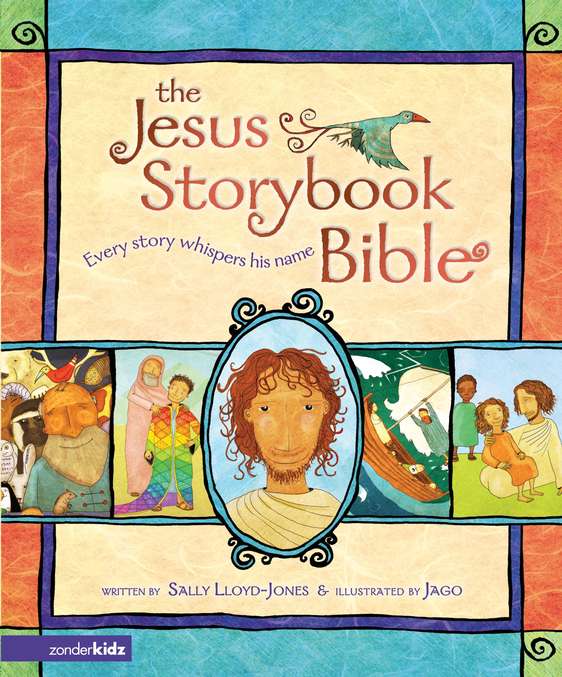
Book Review: the Jesus Storybook Bible

“Many years later, another Son would climb another hill, carrying wood on his back.  Like Isaac, he would trust His Father adn do what his Father asked.  He wouldn’t struggle or run away.

Who is He? God’s Son, his only Son – the Son He loved.

The Lamb of God.”

– from the narrative of Abraham and Isaac (Genesis 22)

Almost 3 years ago I was a completely overwhelmed soon to be father charged with the task of properly raising his children and showing them the truth of the Gospel.  As any parent [in this situation] does I began to seek help in the form of childrens’ Bibles.  I was convinced I could begin the Westminister [shorter] catechism after their first birthday and my wife was truly worried.  We were given a slew of childerens’ Bibles and resources that over the last couple years and I have throughly frustrated with the vast majority of them, even to the point of taking a sharpy to a few of them because they were heterodox (to say the least).

*Fast Forward*

With the birth of our second child a close friend (who had heard many a rant on the insufficiencies of children resources) purchased a certain children’s Bible for our kids. This friend has been a wonderful resource in the past, so even though our kids have no shortage of Bible books, we went ahead and added this to their repertoire.  I can now excitedly say that The Jesus Storybook Bible: Every Story Whispers His Name has been wonderful for the kids and for us, too.

One of the unique things about this version that I love is the Introduction.  Sally Lloyd-Jones, who developed The Jesus Storybook Bible, takes time to explain to readers what the Bible is and what the bible is not. They go on to explain the misunderstandings that “some people think the Bible is a book of rules…but the Bible isn’t mainly about you and what you should be doing.” They continue, “Other people think the Bible is a book of heroes” but explain that most of them have major flaws. This all leads up to one of my favorite excerpts:

“No, the Bible isn’t a book of rules, or a book of heroes. The Bible is most of all a Story. It’s an adventure story about a young Hero who comes from a far country to win back his lost treasure. It’s a love story about a brave prince who leaves his palace, his throne – everything – to rescue the one he loves. It’s like the most wonderful of fairy tales that has come true in real life!”

This has been one of the most creative resources I’ve read for children. It’s filled with magnificent and thoughtful illustrations and it doesn’t just help us teach our children the Bible, it teaches them how to read the Bible and how we fit into God’s story. What a wonderful gift to give our kids!  simply put parents, this resource is the single best I have seen to help kids discover the BIG PICTURE of the Bible.

If you have kids, want kids, think about kid, know people who have kids, work with of for kids please purchase this book.

[youtube=http://www.youtube.com/watch?v=v__QaCsdvQk&feature=player_embedded]

are we that narcissistic?

The scenes of the earthquake and subsequent tsunami in Japan are apocalyptic and the more I watch them the more my heart breaks.  Over and over the scenes become worse and as I listen to the commentary a question hit me.  Are we really this narcissistic?  It seems everything that we talk about when it comes to Japan inevitably points back to [the United States].  Gas prices, Nuclear fallout, wondering if that “could happen here”, the falling [US] dollar, etc.  I am not pointing the finger just at you but myself also and I am just asking you to please take 8 minutes, watch the video, read the prayer, and just reflect and pray on those [directly] affected by this crisis and not ourselves.  Before you begin please take a second and clear your head…let the images affects your heart and compel you to pray deeply.

[youtube=http://www.youtube.com/watch?v=QG8vLbYxmpQ&feature=player_embedded]

The power of moving water is greater than most of us can imagine. Nothing stands before it. We are driven to our knees:

Father in heaven, you are the absolute Sovereign over the shaking of the earth, the rising of the sea, and the raging of the waves. We tremble at your power and bow before your unsearchable judgments and inscrutable ways. We cover our faces and kiss your omnipotent hand. We fall helpless to the floor in prayer and feel how fragile the very ground is beneath our knees.

O God, we humble ourselves under your holy majesty and repent. In a moment—in the twinkling of an eye—we too could be swept away. We are not more deserving of firm ground than our fellowmen in Japan. We too are flesh. We have bodies and homes and cars and family and precious places. We know that if we were treated according to our sins, who could stand? All of it would be gone in a moment. So in this dark hour we turn against our sins, not against you.

And we cry for mercy for Japan. Mercy, Father. Not for what they or we deserve. But mercy.

Have you not encouraged us in this? Have we not heard a hundred times in your Word the riches of your kindness, forbearance, and patience? Do you not a thousand times withhold your judgments, leading your rebellious world toward repentance? Yes, Lord. For your ways are not our ways, and your thoughts are not our thoughts.

Grant, O God, that the wicked will forsake his way, and the unrighteous man his thoughts. Grant us, your sinful creatures, to return to you, that you may have compassion. For surely you will abundantly pardon. Everyone who calls on the name of the Lord Jesus, your beloved Son, will be saved.

May every heart-breaking loss—millions upon millions of losses—be healed by the wounded hands of the risen Christ. You are not unacquainted with your creatures’ pain. You did not spare your own Son, but gave him up for us all.

In Jesus you tasted loss. In Jesus you shared the overwhelming flood of our sorrows and suffering. In Jesus you are a sympathetic Priest in the midst of our pain.

Deal tenderly now, Father, with this fragile people. Woo them. Win them. Save them.

And may the floods they so much dread make blessings break upon their head.

O let them not judge you with feeble sense, but trust you for your grace. And so behind this providence, soon find a smiling face.

In Jesus’ merciful name, Amen.

HT: Desiring God

Black History Month 2011 Facts

February 1st:

  • Carter Woodson started “Negro History Week”.  He chose the second week of February because it marked the birthday of 2 people Abraham Lincoln & Frederick Douglass.
  • Langston Hughes accomplished writer, poet, and journalist of the Harlem Renaissance was born February 1, 1902
  • “I don’t want a black history month. Black history is American history.” – Morgan Freeman

February 2nd:

  • Muhammad Ali the “greatest [boxer] of all time” was originally named after the 19th century abolitionist & politician Cassius Marcellus Clay
  • The banjo originated in Africa and up until the 1800’s was considered an instrument only played by blacks.

February 3rd:

  • Dr. Martin Luther King Jr. was stabbed by an Black woman in 1958 while attending his book signing at a department store in Harlem.

February 5th:

  • Madame C.J. Walker invented specialized hair products 4 African-American hair & became the first American woman 2 become a millionaire.

February 6th:

  • Madame C.J. Walker invented specialized hair products 4 African-American hair & became the first American woman 2 become a millionaire.

February 7th

  • Ophelia DeVore-Mitchell: One of the 1st African American models in the US & was the first AA woman to start a Modeling Agency.

February 8th

  • “Some say we are responsible for those we love. Others know we are responsible for those who love us.” – Nikki Giovanni.

February 9th

  • During the Attack on Pearl Harbor, an African American cook named Dorie Miller shot down 2 Japanese Planes w/ anti-aircraft machine gun.
  • “The time is always right to do what is right.” – Martin Luther King, Jr.

February 10th

  • “Racism is man’s gravest threat 2 man-the maximum of hatred 4 a minimum of reason.” ~Abraham J. Heschel
  • “Your willingness to look at your darkness is what empowers you to change.” ~Iyanla Van Zant

February 11th

  • “Strange Fruit” the song about lynching in the south made famous by Billie Holiday was originally a poem by a Jewish schoolteacher
  • On this day in 1990 Nelson Mandela was released from prison in Cape Town, South Africa after being a political prisoner for 27 years.

February 12th

  • Judy W. Reed was the first African-American woman to receive a patent in 1884 for a hand-operated machine used to knead and roll dough.
  • Bessie Coleman (1893-1926) was the first licensed African-American pilot in the world. She received aviation instruction in France.

February 13th

  • Ben Carson led the 1st successful operation 2 separate a pair of Siamese twin infants who were joined @ the back of the head in 1987.

February 14th

  • In 1992, 35-year-old athlete Evelyn Ashford became the oldest woman to win an Olympic gold medal in track-and-field.
  • On 2/8/88 Debi Thomas became the 1st African American to win a bronze medal during the Winter Olympics & went on to become a surgeon.

February 15th

  • Today we Spotlight Thomas Jennings who was the First African American inventor to receive a patent for an invention.
  • George T Sampson invented a clothes dryer that used heat from a stove in 1892.

February 16th:

  • Charlotte Ray graduated from Howard University in 1872 to become the first African American female lawyer.
  • Did you know that Dizzy Gillespie was one of the founding fathers of Jazz and one of the inventors of bebop?!

February 17th

  • In the mid 1800s Philadelphia was known as “The Black Capital of Anti–Slavery” ’cause of the strong abolitionist presence there.
  • Alfred Anderson, Father of Black Aviation, trained black aviators for 6 decades. First black to acquire a Transport License.

February 18th

  • Ashmun Institute was founded in 1854 as the first institution of higher learning for African American’s. It was later renamed Lincoln University.
  • Ruth Simmons was the first Black female President of a top-ranked college (Smith) in ’95 & of an Ivy League University (Brown) in ’01.

February 19th

  • Dr. Patricia. E. Bath (1949–) invented a method of eye surgery that has helped many blind people to see.
  • Jan Ernst Matzeliger (1852–1889) invented a shoe-making machine that increased shoe-making speed by 900%!

February 20th

  • In 1909, Matthew A. Henson accompanied Robert E. Peary on the first successful U.S. expedition to the North Pole.
  • William Wells Brown was the first African-American to publish a novel, a play, and a travel book.

February 21st

  • Phillis Wheatley was the first published African American poet & the first African-American woman whose writings were published.
  • African-American surgical technician Vivien Theodore Thomas developed the procedures used to treat blue baby syndrome in the 1940s.

February 22nd

  • After retiring from baseball, hall-of-famer Jackie Robinson helped establish the African-American owned and controlled Freedom Bank.
  • Frederick Jones held over 60 patents, most of them pertained to refrigeration. One of them was used in WWII to preserve medicine.

February 23rd

  • Garrett Morgan an African American inventor created the gas mask and then he created the ability to separate blood from plasma.
  • In 1855 John Mercer Langston became one of the first AA ppl in the US elected to public office when elected as a town clerk in OH.

February 24th

  • Elbert F Cox was the first African-American to earn a PhD in Mathematics in 1925 from Cornell University
  • CHARLIE SIFFORD was the first African-American athlete to compete in the PGA tour. (1961)

February 25th

  • African-American surgeon Charles R. Drew is often credited with the invention of the first large-scale blood bank.
  • January 1949, James Robert Gladden becomes first African American certified in orthopedic surgery.

February 26th

  • Wendell Scott broke the color barrier in stock car racing (1952) & is the only black driver to win a race in the Sprint Cup (1964).
  • Madam C.J. Walker was the first female millionaire and she just happened to be an African American.

February 27th

  • Hattie McDaniel was the first African-American woman to win an Oscar in 1940 for Gone With the Wind
  • W.E.B. DuBois was the 1st A-A 2 earn a doctorate @ Harvard. He also attempted virtually every possible solution 2 the problem of racism

February 28th

  • In 1850 Lucy Stanton of Cleveland becomes the first African American woman to graduate from an American college or university.
  • Alain LeRoy Locke was the first African-American Rhodes Scholar. There have been many since him!
  • In 1901: Bert Williams & George Walker record their music for the Victor Talking Machine Co. and become the first black recording artists
  • Henry Blair invented the corn seed planter in 1834, & cotton planter in 1836. He couldn’t read or write so he signed his patent with an X.
  • Frederick Jones held over 60 patents, most of them pertained to refrigeration. 1 of them was used in WWII to preserve medicine.
  • Louis Armstrong bought his first coronet at the age of 7 with money he borrowed. He taught himself to play while living in a home for delinquents.
  • Politician and educator Shirley Chisholm survived 3 assassination attempts during her campaign for the 1972 U.S. presidential election.
  • Supreme Court Justice Thurgood Marshall said he was punished for misbehavior in school by being forced 2 write copies of the Constitution.
  • Supreme Court Justice Thurgood Marshall was a classmate of writer Langston Hughes during their studies at Lincoln University.
  • A serious student, Condoleezza Rice entered college at the age of 15, and was an assistant professor at Stanford by age 26.
  • Most of the homes architect Paul Williams designed were built on land whose deeds barred blacks from being able to purchase them.
  • On Jan 20, 2009 Barack Hussein Obama took office as our nations first Black President a feat I didn’t think I’d see in my lifetime.

Lent

Lent begins March 9th of this year and marks the period of the liturgical year leading up to Easter.  This practice was virtually universal in Christendom until the Protestant Reformation.  Although some Protestant churches do not observe Lent, many protestants do (like my wife and I).

The traditional purpose of Lent is the preparation of the believer, through prayer, penitence,almsgiving and self-denial, for the annual commemoration of the Death and Resurrection of Christ.

Conventionally, it is described as being forty days long, though different denominations calculate the forty days differently. The forty days represent the time that, according to the Bible, Jesusspent in the desert before the beginning of his public ministry, where he endured temptation by Satan.

There are traditionally forty days in Lent which are marked by fasting, both from foods and festivities, and by other acts of penance or refraining. The three traditional practices to be taken up with renewed vigour during Lent are prayer , fasting, and almsgiving. Today, some people give up a vice of theirs, add something that will bring them closer to God.  For example many people give the time or money wasted to give to charitable purposes or organizations.

[polldaddy poll=4666388]

  • « Previous Page
  • 1
  • …
  • 27
  • 28
  • 29
  • 30
  • 31
  • …
  • 42
  • Next Page »

Soma Community Church

804 Fairmount Blvd
Jefferson City, MO 65109
(573) 635-4832

Click Here for Mailing Address

Get Connected

  • 10 Year Anniversary
  • New Here
    • FAQ/ Location
    • About Us
    • What We Believe
    • Our Leadership
    • Our Name
    • Affiliations
  • Get Involved
    • Baptism
    • Rooted (College Ministry)
    • Covenant Membership
    • Events
  • Blog
  • Sermons
  • Giving
  • Contact Us

Copyright © 2025 ·SOMA Community Church · Website by Megaphone Designs