
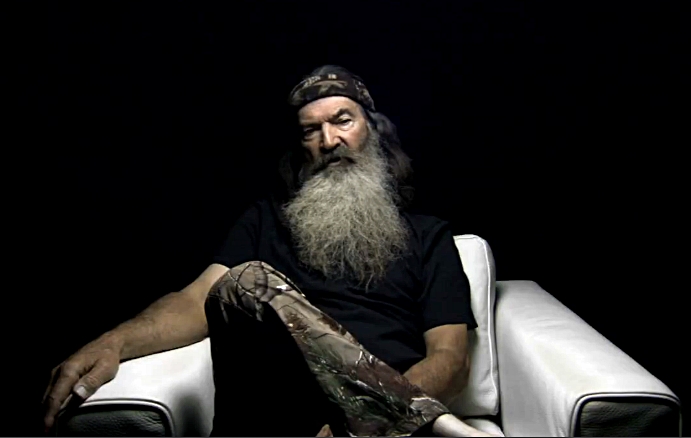
 I should begin this post by saying I have never once watched an episode of Duck Dynasty nor do I intend to. Yes, I know what the show is about and know I do not need to prove it to you, and yes, I am still a Christ follower (just kidding, though for some of you I not kidding at all). The news of Phil Robertson’s comments came across my screen and left just as quickly as it appeared but I did understand what was coming next and I just braced myself. It is in these moments that I dread social media and its ability to give everyone a public voice (but this is a post for another day). After some of the Facebook posts I saw over the last few days, I have decided to say my 2 cents and then let the debate rage.
I wish [Christians]would care this much about poverty & abuse & slavery & caring for the marginalized and oppressed then the kingdom of God would be so much better reflected in this dark crazy world.
I am completely for anyone’s Constitutional right to free speech, people can say what they want to say and believe what they want. What makes me sad is that these moments represent Christians to the world. The internet is powerful, Social Media is powerful because it is distilled. The things we say and do reflect what we truly believe and from the looks of things we care more about:
- Guns
- Duck Dynasty
- Gay Marriage
- Conservative/ Republican/Libertarian “values”
- the Constitution
- the United States and so much more
Even though we make very concerted efforts at connecting these things to the Kingdom of God, though they can not be connected. I have met so many amazing people who live out their faith in such beautiful, humble, and brave ways. They are opening the doors to the kingdom of heaven for people instead of wasting time defending positions for millionaires who can take care of themselves or TV stations shooting themselves in the foot. They are outraged about things that Jesus is orphans, poverty, oppression, slavery, abuse, advance of His Kingdom and His Gospel, people dying and going to a real hell and the question is are willing to do something about these real issues. So many people commenting, writing letters, starting petitions, but can not articulate the last time they shared there faith. You might be fighting for the wrong kingdom. The amazing people I mentioned, they reflect the incarnation of Christ and that’s what we’re supposed to be celebrating this season.
This is the Advent season that affords us the reality that Christ came for us and in that truth we are supposed to be turning the world upside down, our lives are supposed to be centered around. It is for this reason [and others] I am over this “debate” and so should you too.
Let me know what you think by liking the post, commenting below, and/or sharing it and thinks for listening.
 I remember driving around Kansas City with some friends while in college when I was first encountered this question that had plagued me for the entirety of my Christian life, “what is the difference between Christian and secular music?” You see on my radio I was listening to “secular” music and my friend was becoming continually and visibly agitated with it. When he asked me to change it, the question was raised by another friend. Although it seemed an initially obvious answer, I did not immediately know that answer. Actually, the more I thought about it the more I realized I am not sure. Was it that a Christian song had to mention Jesus or God? If that is true then what do we do with the books of Esther and Song of Songs (which do not mention either)?
 I have a guilty pleasure, cooking shows. I love “the Food Network (FN)”, “Top Chef” and others. I have learned so much that has served to advance my cooking skills. Paula Deen has been among the host that have given me a better understanding of Southern culture and cooking. I was initially surprised as the next person to hear of Mrs. Deen’s comments, use of the word “Nigger” and subsequent firing by the FN and other sponsors. What further concerned me was the instant “I support Paula Deen” Facebook pages and multiple post showing support for a women who used a word that, as a society, we have considered repugnant for many decades (though in my humble opinion not long enough). Additionally, I began to laugh when I read post from my friends comparing Deen’s situation to movies that say “Nigger” or “nigga (not that this word is much better)” a ridiculous amount of times (e.g. Django Unchained). I truly believe that Paula Deen should not be fired for admitting that she called someone a nigger 30 years ago but you should really read the deposition for yourself. The whole thing is now out and it is a pretty long read and damning read, here are some of the highlights (lowlights) and why I believe she was really fired.