
A year or 2 back I remember reading an article that said something to the sort of Parents should be allowed to have their newborn babies killed because they are “morally irrelevant” and ending their lives is no different to abortion. This began a disturbing trend that came next to the Dr. Kermit Gosnell arrest and subsequent conviction but no real news of the horrors of this man. Next, I had the privileged of listening to Lila Grace Rose at a local banquet and her inspiring ministry for the unborn nationwide. Next, I watched as Rep. Wendy Davis (D) from Texas filibustered a bill, in some spiffy shoes I might add, that would have severely reduced and restricted access to abortions in Texas thus she became a quick celebrity on Pro-Choice circles.
Sanctity of life and MLK

Over the last few years of my life, around this time of year, I have been placed in a conundrum in my life. Every January the celebration of Martin Luther King’s (MLK) Birthday and the Sanctity of Life Sunday seem to fall on the same Sunday.
the stats are in and they are staggering
“A father to the fatherless, a defender of widows, is God in his holy dwelling.” – Psalm 68:5
A few years ago I was given a book by my best friend and it blew me away. The book is called “Church for the Fatherless: A Ministry Model for Society’s Most Pressing Problem” by Pastor Mark Strong. The book itself served as no surprise to me but as I dug deeper I found myself trying to better understand the Churches role in the remedy. Here are the stats
- According to 72.2 % of the U.S. population, fatherlessness is the most significant family or social problem facing America.
- An estimated 26.63 million children (33%) live absent their biological father.
- Of students in grades 1 through 12, 39 percent (17.7 million) live in homes absent their biological fathers.
- Currently 57.6% of black children, 31.2% of Hispanic children, and 20.7% of white children are living absent their biological fathers.
- The 1997 Gallup Youth Survey found the following among U.S. teens:
- 33 % live away from their father
- 43% of urban teens live away from their father
- In 2010 over twenty million lived with no father (biological, adoptive, or step).
Looking at this epidemic is seriously overwhelming. The question I have is how do we equip communities to bring healing and change to the fatherless landscape in our cities?
This is not something that the Bible is quiet about yet at all. As I read through the Bible God speaks about the orphan with great care and HE also charges us with engaging them. Throughout history Christians have spearheaded movements in this arena and we have a distinct opportunity to do it once again. The question is simple, how? How do we engage a culture so different the the one we have built our churches around? How do we respond to this with the heart of the One who says, ‘Father, He is father to the fatherless?’ You see this is a theological issue, it’s not just a social issue that the government has to take care of kids, because God Himself calls Himself Father to the fatherless. Our response is that we have to be reconcilers—that we have to enter the shame and suffering of a generation. We have to step into their lives with the same intimacy in which Christ stepped into ours at the incarnation. This a messy process but one that we must be engaged in to affect our communities and reflect our God.
[update] I saw this video and it broke my heart, yet it fits right in with this subject.
[vimeo http://vimeo.com/67922579]
Why I’m over it and so should you
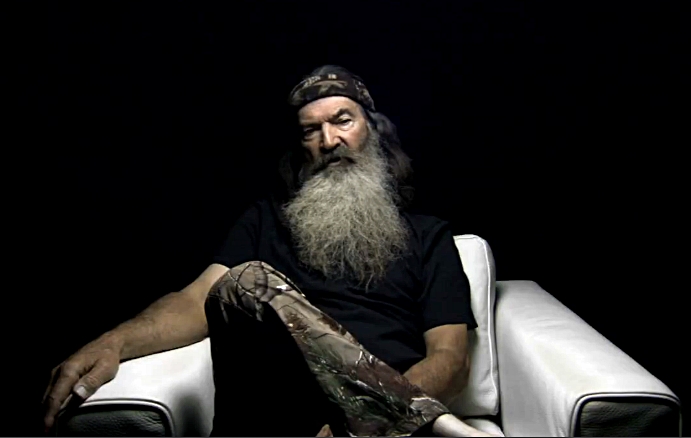 I should begin this post by saying I have never once watched an episode of Duck Dynasty nor do I intend to. Yes, I know what the show is about and know I do not need to prove it to you, and yes, I am still a Christ follower (just kidding, though for some of you I not kidding at all). The news of Phil Robertson’s comments came across my screen and left just as quickly as it appeared but I did understand what was coming next and I just braced myself. It is in these moments that I dread social media and its ability to give everyone a public voice (but this is a post for another day). After some of the Facebook posts I saw over the last few days, I have decided to say my 2 cents and then let the debate rage.
I wish [Christians]would care this much about poverty & abuse & slavery & caring for the marginalized and oppressed then the kingdom of God would be so much better reflected in this dark crazy world.
I am completely for anyone’s Constitutional right to free speech, people can say what they want to say and believe what they want. What makes me sad is that these moments represent Christians to the world. The internet is powerful, Social Media is powerful because it is distilled. The things we say and do reflect what we truly believe and from the looks of things we care more about:
- Guns
- Duck Dynasty
- Gay Marriage
- Conservative/ Republican/Libertarian “values”
- the Constitution
- the United States and so much more
Even though we make very concerted efforts at connecting these things to the Kingdom of God, though they can not be connected. I have met so many amazing people who live out their faith in such beautiful, humble, and brave ways. They are opening the doors to the kingdom of heaven for people instead of wasting time defending positions for millionaires who can take care of themselves or TV stations shooting themselves in the foot. They are outraged about things that Jesus is orphans, poverty, oppression, slavery, abuse, advance of His Kingdom and His Gospel, people dying and going to a real hell and the question is are willing to do something about these real issues. So many people commenting, writing letters, starting petitions, but can not articulate the last time they shared there faith. You might be fighting for the wrong kingdom. The amazing people I mentioned, they reflect the incarnation of Christ and that’s what we’re supposed to be celebrating this season.
This is the Advent season that affords us the reality that Christ came for us and in that truth we are supposed to be turning the world upside down, our lives are supposed to be centered around. It is for this reason [and others] I am over this “debate” and so should you too.
Let me know what you think by liking the post, commenting below, and/or sharing it and thinks for listening.
46664

Like most people I was taken y surprise when I heard the news Madiba’s passing. I understand he was 95, but death always seems to take us by surprise. As I watched the coverage my mind quickly began to think of all the history that this man had seen and been apart of. Additionally, I began to wonder what I have not been told about Madiba. The first thing I always wonder when someone passes is about their life in relationship with Christ. I always found the level and [seeming] completeness of Madiba’s forgiveness to be unique to Christ but I never heard of his spiritual life outside of a baptism when he was in primary school.
Ultimately here is what is most puzzling to me is the change that happened while in prison, from a Malcolm X figure to a Martin Luther King type figure. Mandela was arrested, tried, pleaded guilty to on 150 counts of terrorism and ultimately sentenced to Life in prison between ’62 and ’64. This is the same time in our nations history that the Civil rights movement was running its course in our country. Yet our two context have had completely different, though parallel paths. We were both dealing with entrenched racism which broke the back of our countries, yet our laws and forced integration have not solved the problem. Simultaneously, South Africa’s apartheid became even deeper entrenched and without hope for change. In February of 1990 Mandela was freed and the fate. Of a whole nation began to change in seemingly and instant. Over the next 4 years he led them from apartheid to a new constitution and a republic not all that dissimilar to ours. The difference is that what it took our country over a generation to accomplish was done, in a more hostile environment, in about 4 years.
This brings up a couple of questions:
- Whats the difference between the 2 countries?
- Which model should we follow in the church?
You see the American church in the 21st century is still dealing with 20th century problems and race is a huge dividing one. Honestly, I am not too worried about our country of South Africa’s but I am concerned about the issues surrounding the Kingdom of God.
So I would love to hear you thoughts, which model do we follow to solve this HUGE problem within the church? U.S. desegregation, Mandela’s or something else?
Blurred lines
The problem with drawing lines in the sand is that with a breath of air they disappear.
 I remember driving around Kansas City with some friends while in college when I was first encountered this question that had plagued me for the entirety of my Christian life, “what is the difference between Christian and secular music?” You see on my radio I was listening to “secular” music and my friend was becoming continually and visibly agitated with it. When he asked me to change it, the question was raised by another friend. Although it seemed an initially obvious answer, I did not immediately know that answer. Actually, the more I thought about it the more I realized I am not sure. Was it that a Christian song had to mention Jesus or God? If that is true then what do we do with the books of Esther and Song of Songs (which do not mention either)?
Unfortunately, this is a dilemma that is not unique to the sphere of music. We live in a world where the divide between Secular and Sacred is constantly and adamantly being drawn by both Christians and non-Christians alike. We are frequently labeling things “Christian” that I suppose we fear otherwise might be confused for something else.
- Christian schools
- Christian groups
- Christian movies
- Christian books
- Christian bands, etc.
If our music, our schools, our groups, our books, our actions do not point those around us to Jesus, and serve to redeem a broken world, then are they not indeed unchristian? Instead of creating clear bright line, like we would like, Christ blurred the lines between secular and sacred, seemingly implying that the division the ritualistic religion of the day had crested a false division. If All things are God’s, all things are in fact sacred? IS this going to o far? Why? Furthermore, He was criticized for almost everything he did because he acted as if things such as the purity and impurity, pious and impious, Jew and Gentile, powerful and weak, rich and poor did not exist as the world saw them. When Paul came on the scene he preached this as he proclaimed in Romans there is no division, but “all are one in Christ Jesus.”
Is it easier to know who is in or out? Is it that we wanted to be able to sit at the table with drunkards tax collectors and sinners, as long as we knew who was who? Honestly , I’m not really sure, so I put the question to you, is there a Sacred/ Secular divide?
Some additional thoughts from this weekend
Most people don’t know but the amount of information that many pastors compile for one sermon is MASSIVE. We have researched, read, prayed for weeks on end and find ourselves to edit and cut that information to around 30 minutes (in our context). That being said I still wanted to share some thoughts that I wanted to share but were left on the editing room floor. I hope this additional information is fruitful you as it was with me.
How do you handle a victory? We said first of all,
I. With every great work, give glory to God (Neh. 6:15-16).
With every victory we have ultimately, all the credit goes to God. It is great to pray that in our lives, we pray for a God-thing. God loves to get all the glory! Nehemiah in Neh. 6:15 does give the glory to God as a token phrase (like you hear at an award show). God had birthed a burden in his heart, broke his heart with the burden, helped him persevere as he waited for God’s timing, answered prayer with the King, encouraged him when he arrived among opposition, gave him confidence and courage to rally God’s people, encouraged him in the midst of ridicule, the halfway hurdle, gave him boldness to confront sin and helped him focus among distractions.
So it is not unusual for the soul who has been dependent on God in everything to grant Him the glory when God accomplishes a great work. The more you abide with the Lord, invite him to every aspect of your life, the more you will see His fingerprints over everything. If God does a dozen things with every good work, we may see only two things. However, the more we have been with the Lord in the small things, the more we see Him working in the bigger things. Secondly we said:
II. Guard great victories, because they can be followed by great failure (Neh. 6:17-7:3)
How do you guard your victories? We said first of all, it requires us to:
1. Faithfulness (Neh. 7:2)
Hanani was Nehemiah’s literal brother (Neh. 1:2). Remember him? He was the one who told Nehemiah about the problem in the first place. Hananiah was a governor “of the castle charge.” This “was a fortress in the temple area, guarding the north wall of the city, which was especially vulnerable to attack.”[3]
Nehemiah says the reasons he picked Hananiah was because he was faithful and God-fearing. Faithfulness is “doing what you said you would do.” Dr. Bob Jones, Sr., often said, “The greatest ability is dependability.”[4] Can you be depended on? Paul says, “It is required of stewards that they be trustworthy” (1 Cor. 4:2). Pastor Steve Cole in Arizona provides four ways to develop faithfulness:[5]
- Recognize and define the responsibilities that God has given you to do. If you are a husband and/or a father, you have to provide basic needs of your family. If you are part of a church body, you are responsible to serve God in some capacity. It is hard to be faithful if you are foggy about what you should be doing.
- Start with and don’t neglect the small things. Pay your bills on time. Keep your appointments. Jesus said, if you are faithful in the little things, you will be entrusted with more (Luke 16:10).
- Keep your relational priorities straight. This means your time with Jesus, your time with family, your accountability relationships and your relationship to others in the body of Christ.
- Learn to use your time more effectively. This is huge. I need to write down my priorities down. Are you spending excessive amounts of time on the internet, video games and television? We all have the same number of hours entrusted with us and a good sign of faithfulness is how we use it.
2. Fear of God (Neh. 7:2)
The fear of God is the dread of displeasing Him. It is not to be afraid of God, but your desire to please Him takes precedence over everything else. We have talked about it a lot in the previous weeks, so I am not going to belabor the point. It comes out of knowledge of God. The more you know Him, the more you want to please Him. Solomon says, “The fear of the Lord is the beginning of wisdom” (Prov. 1:7). Wisdom is the ability to make the most God-honoring decision in any situation. Anyone need that? I certainly do! The way it starts is to ask God to give you such a dread in hurting Him with the choices of your life. This is the fear of God. But it is interesting that he connects faithfulness and fear of God together. I believe the more you fear God, the more faithful you will be, because you will have wisdom to make the best choices in every situation.
3. Watchfulness (Neh. 7:3)
So character is built by faithfulness, fear of God and lastly, watchfulness. Knowing these guys feared God and were faithful, they were asked assigned the job of watchfulness (and to delegate it to others). What he is saying here is that they need to be vigilant. Lazy guards are no guards at all. The Hebrew is tricky here. But I think he means to be on watch, even in the hottest part of the day, right in the afternoon, around lunch time, when we can tend to be lax, we need to be on guard. Remember some people had worked on the wall near their homes (Neh. 3:10, 23, 28-30). Now Nehemiah wants them to realize that they need to protect what was accomplished.
I think the lesson here is that unless we protect what was accomplished for the Lord, the Enemy will come and take over. This is why Paul said, “After you done everything, stand” (Eph. 6:11). This is why so many schools which were once started on godly principles are now as secular as secular can be. Look at all the churches now once so solid in preaching the Gospel, now fill their pulpits with people preaching “another gospel.” Beloved, we are simply one generation away from destruction, and so need to be watchful. Living hope can easily be dead hope!
There is a fine line between watchfulness and compromise. The reason why compromise happens is because we are not watchful. It all comes down to a character issue. If Tobiah’s wife and family had been watchful in not having any relationship with Tobiah, the compromise that now resulted into the next generation, would have been avoided. Here are some things we need to guard:
- Our heart (Prov. 4:23) Guard carefully what you allow in your life that will ultimately impact your heart and soul. Watch out for sharing intimate moments with people who are not your spouse.
- False doctrine. Paul tells the church in Corinth that Satan comes like an angel of light, disguising himself as “servants of righteousness,” preaching a false gospel (2 Cor. 11:14-15). I have seen churches and people destroyed because this was not taken seriously.
- Our private time. Guard your times when you are alone, tired, overwhelmed or bored.
- Recreation and Media. Check with pluggedinonline.com or christiananswers.net before renting or watching a movie. Use an internet filter for your computers.
The point here is that we need to guard our victory times because it can be followed by great failure. But keeping our priorities straight (keep worship and the Word central), avoiding any small hints of compromise, and keep working on our character (like faithfulness, a growing fear of God and being ever so watchful) will help us. All of us know what it is to put our guards down when things are going well. Let us decide now and pray, “Lord help us protect what you have accomplished.”
What do we do?
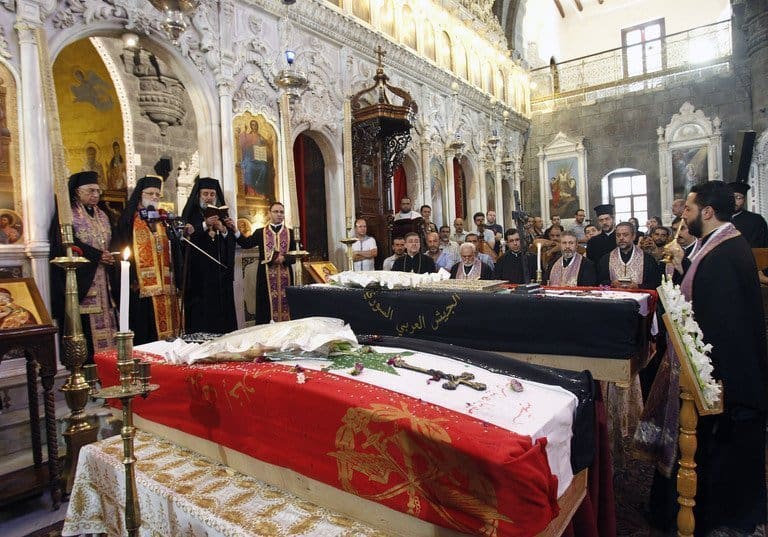 I have to admit that when it comes to the conflicts over seas I am tired. Tired of being the “police of the world”, tired of “spreading peace” and tired of fighting for the wrong kingdom . Yet over the last week I’ve wondered “What should we [as Christ followers] do in this world”?
Right now it seems like it is open season on our Christian brothers around the world.
- Seventy-eight Christians were slaughtered Sunday by twin suicide bombers at a historic church in Pakistan’s capital, Islamabad.
- Less than 24 hours earlier a group of militants (some allegedly from the U.S,) murdered at least 68 workers and shoppers at a mall in Kenya, allegedly shouting for Muslims to get out of the way so they could specifically kill Christians.
- Coptic Christians in Egypt also have been targeted recently by supporters of the Muslim Brotherhood, and Christians in large numbers have left their ancient enclaves in Iraq and the West Bank after churches there were attacked or Christians were threatened.
- In late May, International Christian Concern, an evangelical ministry to the persecuted church, released to Christianity Today an anonymous open letter from a “trusted Syrian source” that explains why many Syrian Christians support Assad’s regime.
Many Middle eastern Christians feel that the government was bad [under the former regime], but they were at least safe. After researching what has happened in historic churches in places like Aleppo and Homs I know that we must do something but the question in my mind is what? Patriarch Ignatius Joseph III Younan of the Syrian Catholic church in Damascus said in May that Christians are so frustrated with Western policy, which he believes is fomenting Islamic radicalism and anti-Christian hatred, that they may give up on the West altogether.
“I believe there will be a time coming when Christians of the Middle East will no longer look to the West for support and perhaps to better strengthen their roots with the Eastern culture and civilization … [to] Russia, to India, to China,” he said.
So in light of this [and many other things] I wonder, [as Western Christians] what do we do?
I’m really looking forward to your comments and ideas.
We are fighting for the wrong kingdom!
“It frustrates me how church people discern truth using their politics instead of their Bibles, and it frustrates me that they don’t know the are doing it.”
– Reverend Dr. Derrick Lynch, Blue Valley Baptist Church
As an American and also as an evangelical Christian, I can hardly bear to watch this nightmare unfolding. It’s bad for Christianity, heck it’s bad for America. Here is my take on the sorry spectacle of Christian politics — and how to fix it.
Politicians continue to use and abuse the language and symbols of Christian faith in order to win political support. They speak of God, Jesus, Christian faith and Christian values. They bow their heads in prayer at a million chicken dinners. Then Christian voters — perhaps flattered, perhaps reassured — think that these evocations of Christian symbols and terms actually mean something. Living in the Midwest I I see and hear this kind of foolishness daily. This version of Christian politics is inherently corrupting to Christian faith, ethics and witness. It confuses the message of Christianity with that of the politician of the moment. I’m not sure about your baptism but I do not remember getting handed a card to a particular political party. This conflation damages the moral witness of Christians in culture, it makes it harder for millions to even consider the claims of historic Christian faith. It drives many away from God altogether. Don’t believe me? Let me give you an example.
The whole Obama rodeo clown debacle is repugnant. Some people at the fair see the rodeo incident in which a ringleader taunted a clown wearing a mask of President Obama, played with his lips as a bull charged after him was neither racist nor disrespectful. The hooting and hollering from the crowd that night was because of a fundamental dislike of the president. Immediately we had “Christians” on the Left and Right claiming a foul and I do not want to get into the details but there are somethings I want to point out:
- “… but they did it to President Bush”. Again, I don’t know about you but my kids would get into trouble for making an asinine excuse like this.
- “[Political Party] is just the lesser of two evils”. Just remember that you are still advocating for evil.
- “[Political Party] is closer to my values”. Yes, and they are trying to setup there own [Political] kingdoms that compete with God’s.
Here is a wake-up call:
- Rush Limbaugh hates Jesus.
- Sean Hannity hates Jesus.
- Rachel Maddow hates Jesus.
- Mark Levin hates Jesus.
- Kieth Olbermann hates Jesus.
- Piers Morgan hates Jesus.
- Anderson Cooper hates Jesus
- Fox News, CNN, MSNBC, NPR and whomever else I missed all hates Jesus.
- Republicans, Democrats, Libertarians, and [fill in your political party if it was not mentioned] parties are ALL antithetical to the Kingdom of God.
I know you agreed with some of the list and others you disagreed but I want to ask you this, What kingdom are they fighting for? When you listen to them talk/ advocate for their position who are they talking about? A Political party, an ideology, or Christ? Better yet if someone were to listen to you talk/ advocate who would they say you are talking about? Unfortunately, we have sold out to these fiefdoms while the Kingdom of God (you know the one that Christ died in establishing) loses ground. Do not allow your voice to be co-opted by your allegiance to an earthly kingdom or party. We have prostituted ourselves out so much that the outside world does not know the difference between Christ many political parties and that is a shame.
We are fighting for the wrong kingdom, let’s start fighting for the right one because all of the other ones are just [really] ghetto idols. It’s not that much different than when my son puts on my shoes and marches around the house trying to be me. Though its cute, he is a far cry from filling the shoes he’s trying so hard to handle.
Why Millennials Are Leaving the Church: A Response to Rachel Held Evans
Recently, I was given a recent CNN article “Why Millennials Are Leaving The Church” by Rachel Held Evans. When reading the post it becomes evident that (in my opinion) she is not talking about the “holy catholic church,” but a narrow subculture of conservative American evangelicals but the conversation is afoot none the less. Unfortunately, her post does not [seem to] address why young adults in America are leaving the Eastern Orthodox, Roman Catholic, broad evangelical, nor mainline churches. I must admit that her post has struck a chord with a larger swath of readers (see the thousands of comments below her post). She is addressing a perennial topic of conversation among church leaders and church goers: what will happen to the next generation.
Like Rachel, I’m in my early 30’s, right on the border of the millennials, and many of the questions and doubts I hear from the millennial generation resonate with me too, but the analysis offered from Trevin Wax below differs somewhat from Rachel’s.
I guess the questions is simple, If you are below 30 why are you leaving (staying) in the church? I look forward to your comments below.
Rachel’s Analysis
Rachel thinks millennials are leaving the church due to the perception that evangelicals are
“… too political, too exclusive, old-fashioned, unconcerned with social justice and hostile to lesbian, gay, bisexual and transgender people.”
She’s right to decry a vision of Christianity that reduces repentance to a list of do’s and don’ts. I too have noticed that many millennials desire to be involved in mercy ministry and support justice causes. And I couldn’t agree more when she says “we want churches that emphasize an allegiance to the kingdom of God over an allegiance to a single political party or a single nation.”
The Church’s Response.
How has the church responded? Rachel sees church leaders trying to update their music or preaching style, and thereby running up against the “highly sensitive BS meters” we millennials have. We’re not fooled by consumerism or performances when churches cater to what they think we want.
Rachel writes:
“What millennials really want from the church is not a change in style but a change in substance.”
I agree with that sentence for the most part, although I would tweak the last line to say “What millennials really want from the church is substance.” Not a change in substance, necessarily, just substance will do.
Too often, our churches have offered a sanitized, spiritualized version of self-help therapy, and Jesus has been missing. And that’s the problem. Like every generation, she says, “deep down we long for Jesus.”
Here’s where Rachel and I part ways – on what communities following Jesus look like in our culture.
- « Previous Page
- 1
- …
- 7
- 8
- 9
- 10
- 11
- …
- 30
- Next Page »