Soma Community Church

Gospel/ Family/ Mission

  • 10 Year Anniversary
  • New Here
    • FAQ/ Location
    • About Us
    • What We Believe
    • Our Leadership
    • Our Name
    • Affiliations
  • Get Involved
    • Baptism
    • Rooted (College Ministry)
    • Covenant Membership
    • Events
  • Blog
  • Sermons
  • Giving
  • Contact Us

Happy Reformation Day!!!

In 1516-17, Johann Tetzel, a Dominican friar and papal commissioner for indulgences, was sent to Germany by the Roman Catholic Church to sell indulgences to raise money to rebuild St Peter’s Basilica in Rome (where the Pope currently resides).

This day in 1517, Martin Luther wrote to Albrecht, Archbishop of Mainz and Magdeburg, protesting the sale of indulgences. He enclosed in his letter a copy of his “Disputation of Martin Luther on the Power and Efficacy of Indulgences,” which came to be known as The 95 Theses.

The 95 Theses were quickly translated from Latin into German, printed, and widely copied, making the controversy one of the first in history to be aided by the printing press. Within two weeks, copies of the theses had spread throughout Germany; within two months throughout Europe.

Luther’s writings circulated widely, reaching France, England, and Italy as early as 1519.

Simply enough the movement began as an attempt to reform the Catholic Church. Many western Catholics were troubled by what they saw as false doctrines and malpractices within the church, particularly involving the teaching and sale of indulgences. Another major contention was the practice of buying and selling church positions (simony) and what was seen at the time as considerable corruption within the church’s hierarchy. This corruption was seen by many at the time as systemic, even reaching the position of the Pope.

Other reformers, such as Ulrich Zwingli, soon followed. Beliefs and practices under attack by Protestant reformers included purgatory, particular judgment, devotion to Mary (Mariology), the intercession of and devotion to the saints, most of the sacraments, the mandatory celibacy requirement of its clergy (including monasticism), and the authority of the Pope.

These are our predecessors so take the time to read what Luther had to say and reflect on the way these simple statements have changed the world.

95 Theses

  1. Our Lord and Master Jesus Christ, when He said Poenitentiam agite, willed that the whole life of believers should be repentance.
  2. This word cannot be understood to mean sacramental penance, i.e., confession and satisfaction, which is administered by the priests.
  3. Yet it means not inward repentance only; nay, there is no inward repentance which does not outwardly work divers mortifications of the flesh.
  4. The penalty, therefore, continues so long as hatred of self continues; for this is the true inward repentance, and continues until our entrance into the kingdom of heaven.
  5. The pope does not intend to remit, and cannot remit any penalties other than those which he has imposed either by his own authority or by that of the Canons.
  6. The pope cannot remit any guilt, except by declaring that it has been remitted by God and by assenting to God’s remission; though, to be sure, he may grant remission in cases reserved to his judgment. If his right to grant remission in such cases were despised, the guilt would remain entirely unforgiven.
  7. God remits guilt to no one whom He does not, at the same time, humble in all things and bring into subjection to His vicar, the priest.
  8. The penitential canons are imposed only on the living, and, according to them, nothing should be imposed on the dying.
  9. Therefore the Holy Spirit in the pope is kind to us, because in his decrees he always makes exception of the article of death and of necessity.
  10. Ignorant and wicked are the doings of those priests who, in the case of the dying, reserve canonical penances for purgatory.
  11. This changing of the canonical penalty to the penalty of purgatory is quite evidently one of the tares that were sown while the bishops slept.
  12. In former times the canonical penalties were imposed not after, but before absolution, as tests of true contrition.
  13. The dying are freed by death from all penalties; they are already dead to canonical rules, and have a right to be released from them.
  14. The imperfect health [of soul], that is to say, the imperfect love, of the dying brings with it, of necessity, great fear; and the smaller the love, the greater is the fear.
  15. This fear and horror is sufficient of itself alone (to say nothing of other things) to constitute the penalty of purgatory, since it is very near to the horror of despair.
  16. Hell, purgatory, and heaven seem to differ as do despair, almost-despair, and the assurance of safety.
  17. With souls in purgatory it seems necessary that horror should grow less and love increase.
  18. It seems unproved, either by reason or Scripture, that they are outside the state of merit, that is to say, of increasing love.
  19. Again, it seems unproved that they, or at least that all of them, are certain or assured of their own blessedness, though we may be quite certain of it.
  20. Therefore by “full remission of all penalties” the pope means not actually “of all,” but only of those imposed by himself.
  21. Therefore those preachers of indulgences are in error, who say that by the pope’s indulgences a man is freed from every penalty, and saved;
  22. Whereas he remits to souls in purgatory no penalty which, according to the canons, they would have had to pay in this life.
  23. If it is at all possible to grant to any one the remission of all penalties whatsoever, it is certain that this remission can be granted only to the most perfect, that is, to the very fewest.
  24. It must needs be, therefore, that the greater part of the people are deceived by that indiscriminate and highsounding promise of release from penalty.
  25. The power which the pope has, in a general way, over purgatory, is just like the power which any bishop or curate has, in a special way, within his own diocese or parish.
  26. The pope does well when he grants remission to souls [in purgatory], not by the power of the keys (which he does not possess), but by way of intercession.
  27. They preach man who say that so soon as the penny jingles into the money-box, the soul flies out [of purgatory].
  28. It is certain that when the penny jingles into the money-box, gain and avarice can be increased, but the result of the intercession of the Church is in the power of God alone.
  29. Who knows whether all the souls in purgatory wish to be bought out of it, as in the legend of Sts. Severinus and Paschal.
  30. No one is sure that his own contrition is sincere; much less that he has attained full remission.
  31. Rare as is the man that is truly penitent, so rare is also the man who truly buys indulgences, i.e., such men are most rare.
  32. They will be condemned eternally, together with their teachers, who believe themselves sure of their salvation because they have letters of pardon.
  33. Men must be on their guard against those who say that the pope’s pardons are that inestimable gift of God by which man is reconciled to Him;
  34. For these “graces of pardon” concern only the penalties of sacramental satisfaction, and these are appointed by man.
  35. They preach no Christian doctrine who teach that contrition is not necessary in those who intend to buy souls out of purgatory or to buy confessionalia.
  36. Every truly repentant Christian has a right to full remission of penalty and guilt, even without letters of pardon.
  37. Every true Christian, whether living or dead, has part in all the blessings of Christ and the Church; and this is granted him by God, even without letters of pardon.
  38. Nevertheless, the remission and participation [in the blessings of the Church] which are granted by the pope are in no way to be despised, for they are, as I have said, the declaration of divine remission.
  39. It is most difficult, even for the very keenest theologians, at one and the same time to commend to the people the abundance of pardons and [the need of] true contrition.
  40. True contrition seeks and loves penalties, but liberal pardons only relax penalties and cause them to be hated, or at least, furnish an occasion [for hating them].
  41. Apostolic pardons are to be preached with caution, lest the people may falsely think them preferable to other good works of love.
  42. Christians are to be taught that the pope does not intend the buying of pardons to be compared in any way to works of mercy.
  43. Christians are to be taught that he who gives to the poor or lends to the needy does a better work than buying pardons;
  44. Because love grows by works of love, and man becomes better; but by pardons man does not grow better, only more free from penalty.
  45. Christians are to be taught that he who sees a man in need, and passes him by, and gives [his money] for pardons, purchases not the indulgences of the pope, but the indignation of God.
  46. Christians are to be taught that unless they have more than they need, they are bound to keep back what is necessary for their own families, and by no means to squander it on pardons.
  47. Christians are to be taught that the buying of pardons is a matter of free will, and not of commandment.
  48. Christians are to be taught that the pope, in granting pardons, needs, and therefore desires, their devout prayer for him more than the money they bring.
  49. Christians are to be taught that the pope’s pardons are useful, if they do not put their trust in them; but altogether harmful, if through them they lose their fear of God.
  50. Christians are to be taught that if the pope knew the exactions of the pardon-preachers, he would rather that St. Peter’s church should go to ashes, than that it should be built up with the skin, flesh and bones of his sheep.
  51. Christians are to be taught that it would be the pope’s wish, as it is his duty, to give of his own money to very many of those from whom certain hawkers of pardons cajole money, even though the church of St. Peter might have to be sold.
  52. The assurance of salvation by letters of pardon is vain, even though the commissary, nay, even though the pope himself, were to stake his soul upon it.
  53. They are enemies of Christ and of the pope, who bid the Word of God be altogether silent in some Churches, in order that pardons may be preached in others.
  54. Injury is done the Word of God when, in the same sermon, an equal or a longer time is spent on pardons than on this Word.
  55. It must be the intention of the pope that if pardons, which are a very small thing, are celebrated with one bell, with single processions and ceremonies, then the Gospel, which is the very greatest thing, should be preached with a hundred bells, a hundred processions, a hundred ceremonies.
  56. The “treasures of the Church,” out of which the pope. grants indulgences, are not sufficiently named or known among the people of Christ.
  57. That they are not temporal treasures is certainly evident, for many of the vendors do not pour out such treasures so easily, but only gather them.
  58. Nor are they the merits of Christ and the Saints, for even without the pope, these always work grace for the inner man, and the cross, death, and hell for the outward man.
  59. St. Lawrence said that the treasures of the Church were the Church’s poor, but he spoke according to the usage of the word in his own time.
  60. Without rashness we say that the keys of the Church, given by Christ’s merit, are that treasure;
  61. For it is clear that for the remission of penalties and of reserved cases, the power of the pope is of itself sufficient.
  62. The true treasure of the Church is the Most Holy Gospel of the glory and the grace of God.
  63. But this treasure is naturally most odious, for it makes the first to be last.
  64. On the other hand, the treasure of indulgences is naturally most acceptable, for it makes the last to be first.
  65. Therefore the treasures of the Gospel are nets with which they formerly were wont to fish for men of riches.
  66. The treasures of the indulgences are nets with which they now fish for the riches of men.
  67. The indulgences which the preachers cry as the “greatest graces” are known to be truly such, in so far as they promote gain.
  68. Yet they are in truth the very smallest graces compared with the grace of God and the piety of the Cross.
  69. Bishops and curates are bound to admit the commissaries of apostolic pardons, with all reverence.
  70. But still more are they bound to strain all their eyes and attend with all their ears, lest these men preach their own dreams instead of the commission of the pope.
  71. He who speaks against the truth of apostolic pardons, let him be anathema and accursed!
  72. But he who guards against the lust and license of the pardon-preachers, let him be blessed!
  73. The pope justly thunders against those who, by any art, contrive the injury of the traffic in pardons.
  74. But much more does he intend to thunder against those who use the pretext of pardons to contrive the injury of holy love and truth.
  75. To think the papal pardons so great that they could absolve a man even if he had committed an impossible sin and violated the Mother of God — this is madness.
  76. We say, on the contrary, that the papal pardons are not able to remove the very least of venial sins, so far as its guilt is concerned.
  77. It is said that even St. Peter, if he were now Pope, could not bestow greater graces; this is blasphemy against St. Peter and against the pope.
  78. We say, on the contrary, that even the present pope, and any pope at all, has greater graces at his disposal; to wit, the Gospel, powers, gifts of healing, etc., as it is written in I. Corinthians xii.
  79. To say that the cross, emblazoned with the papal arms, which is set up [by the preachers of indulgences], is of equal worth with the Cross of Christ, is blasphemy.
  80. The bishops, curates and theologians who allow such talk to be spread among the people, will have an account to render.
  81. This unbridled preaching of pardons makes it no easy matter, even for learned men, to rescue the reverence due to the pope from slander, or even from the shrewd questionings of the laity.
  82. To wit: — “Why does not the pope empty purgatory, for the sake of holy love and of the dire need of the souls that are there, if he redeems an infinite number of souls for the sake of miserable money with which to build a Church? The former reasons would be most just; the latter is most trivial.”
  83. Again: — “Why are mortuary and anniversary masses for the dead continued, and why does he not return or permit the withdrawal of the endowments founded on their behalf, since it is wrong to pray for the redeemed?”
  84. Again: — “What is this new piety of God and the pope, that for money they allow a man who is impious and their enemy to buy out of purgatory the pious soul of a friend of God, and do not rather, because of that pious and beloved soul’s own need, free it for pure love’s sake?”
  85. Again: — “Why are the penitential canons long since in actual fact and through disuse abrogated and dead, now satisfied by the granting of indulgences, as though they were still alive and in force?”
  86. Again: — “Why does not the pope, whose wealth is to-day greater than the riches of the richest, build just this one church of St. Peter with his own money, rather than with the money of poor believers?”
  87. Again: — “What is it that the pope remits, and what participation does he grant to those who, by perfect contrition, have a right to full remission and participation?”
  88. Again: — “What greater blessing could come to the Church than if the pope were to do a hundred times a day what he now does once, and bestow on every believer these remissions and participations?”
  89. “Since the pope, by his pardons, seeks the salvation of souls rather than money, why does he suspend the indulgences and pardons granted heretofore, since these have equal efficacy?”
  90. To repress these arguments and scruples of the laity by force alone, and not to resolve them by giving reasons, is to expose the Church and the pope to the ridicule of their enemies, and to make Christians unhappy.
  91. If, therefore, pardons were preached according to the spirit and mind of the pope, all these doubts would be readily resolved; nay, they would not exist.
  92. Away, then, with all those prophets who say to the people of Christ, “Peace, peace,” and there is no peace!
  93. Blessed be all those prophets who say to the people of Christ, “Cross, cross,” and there is no cross!
  94. Christians are to be exhorted that they be diligent in following Christ, their Head, through penalties, deaths, and hell;
  95. And thus be confident of entering into heaven rather through many tribulations, than through the assurance of peace.

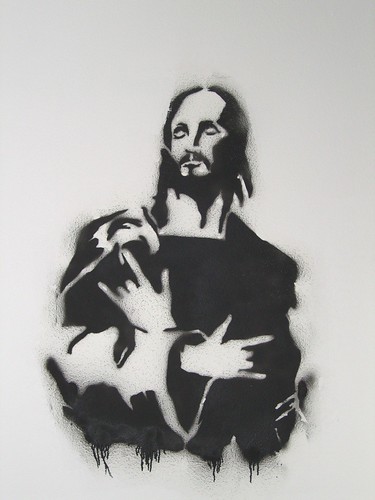
Shameless self promotion

I’m sorry that I haven’t been faithful in writing but between midterms and preparing for my sermons at

on Thursday November 5th and 12th at 8pm Burge Union Gridiron room.  I would love to get through this time but I am loving prepping to share in such a pagan place such as KU (lol) So I wanted to personally invite each of you to come to KU Thursday November 5th & 12th to hear me tell my Testimony and the concept Gospel community. I know it’s been a while but this should be fun! I will be giving my testimony and if you haven’t heard it before this might give you some insight. I would love to see you each there!!

Okay that’s it Shameless I know!!!!

The Reason for God @ Google

In this video Pastor Tim Keller is explaining the main ideas of his book, “The Reason for God” at the Google campus in Mountain View, California. Tim is someone who can calmly and knowledgeably share the Gospel with even the smartest most skeptical people.

[youtube=http://www.youtube.com/watch?v=Kxup3OS5ZhQ&feature=player_embedded]

I was inspired to share this with you because of an ongoing conversation I have been participating with some very intelligent non-Christian men about God. They ask me about my Bible while I’m at work and it set off an hour long conversation about why Jesus is the world’s only hope. Thankfully from listening and reading the teaching of wise Christian men, like Keller and Francis Schaeffer, I have been able to answer most of their questions about God. Listen to this talk and read his book—it will be worth it.

Confession Part 1: My Story

Honestly, I have been procrastinating in writing this series of post but it is needed. So today I will begin with my story that will hopefully give some context for the forth coming confessions.  So here it is……

As a young boy I was blessed to have parents who cared enough to provide me with the opportunity to grow up in a place where I was relatively safe.  In the place, in Kansas, where we lived there is virtually no crime and is a safe suburban/ rural community.  The only problem was that it was 98% Caucasian and I just didn’t fit in (I’m black if you didn’t know). To help with this my parents took us (my siblings and I) to a predominantly African American church in the inner city of Kansas City, MO.  Now living on an acre and a half of land on the outskirts of Leavenworth and going to a dominantly Caucasian school and driving 45 minutes to a black church on Sundays I did not fit the mold in either community. As I went through school, I was seemingly more out going but increasingly lonely as I searched for a place to fit. No matter how hard my parents tried by middle school I had given up, on my church, on my family, on my so-called friends, and on God. At school I privately declared myself an atheist after researching the term. I knew the repercussions if I had done so publicly, so I made this a private matter and, along with a group of a few others, started my quest to “free myself from these religious bonds that had entangled me for so long”. Over the next several years I grew in knowledge and hatred towards the religious (especially at the Christian church). When I attended my parents church, I would privately engage in debates to destroy others faith by asking venomous and loaded questions meant to destroy there faith . I wanted everyone else to feel how I did, alone, angry, but free. I would also terrorize the believers in Christ at my school by taunting them in subtle ways and just making there life miserable. I joined the debate team, which served as fodder to the fire, and researched increasingly to “break others free” and it grew into an obsession by college. My senior year I chose to attend the greatest school on earth Kansas State University. Once there my complete estrangement from everything (church, family, God) began and I was completely content with that. I was free, free to do whatever I so chose and quickly jumped into a river in which I could not stem the current. At this point the only thing keeping me “close” to God was my then fiancé who went to a Pentecostal church who told me that if I did not “speak in tongues I was not Christian”, little did anyone know I could care less but I went to appease her and to show that my family was religious too. The thing that I loved about K-State is that it was so far from everything, I knew no one, they did not know me, and I felt that a weight had been lifted from my shoulders. I thought I was free. I started to meet as many people as I could by just going around and speaking to whomever I saw while neglecting my schoolwork. I met many people of different religions and started questioning their validity while trying to figure life out. By the spring semester of what was supposed to be my sophomore year my high school sweetheart had left me for another man, my “friends” had left me cold in the dust and there I lay alone, broke and bitter once again at God for everything. I decided to fight back and do what damage I could. So every young person that I met I did everything that I knew how to not only learn about their specific religion but make them break each and every tenet that I could.  Little did I know God was using this as a training time for my future ministry.  There was this one young lady, a believer in Christ, that no matter what I did she would not run away but would keep coming back and forgiving me. I never understood this; I actually just thought she was masochistic because she inevitably knew what I would do. For 2 ½ years we went through this dance, she would sometimes bring me tapes of sermons, and trinkets from her mission trips, all the while praying for me. Everything culminated in an indescribable event that even today I am saddened to think of. However I am thankful for its result. The crux of the event is that I needed to not only explain myself to another but also seek forgiveness in the process.  I was given the chance to show that I was repentant and asked to attend church and I did it because I know it was the right thing to do.  While in church that Sunday and for the first time that I remembered, I heard the gospel in a clear way that made sense. I felt accepted for who I was, and I felt God smiling. That day I did not know or completely understand what was going on but I told God that I would keep searching for him until I found what I was looking for. When I moved back to Kansas City I chose not to attend the church of my upbringing but instead found a different community than I was used to.  Reluctantly I became a believer in Christ and I knew that I would and will do anything to teach as many people the redeeming gospel of Jesus Christ. Shortly before the day I was baptized I had this very thought, “For all of my life I have been a mouthpiece for myself and my endeavors, a pretty good one I might add, so why not use the gifts that God has obviously blessed you with to do for others what was done for you.” and so I began to look, learn and prepare to go into fulltime ministry. God has blessed me with opportunites to teach in the church in which I attend working with young adults. I know after teaching that it is exactly where God has called me to be. I am in my last few semesters of a very long and arduous path towards through learning rightly what I have used as ammunition towards others for so long.

Sorry that this is been so long but that is my story, but better yet that is HIStory in which i am involved and thankfully so.

Soli Deo Gloria = Glory to God Alone

A Gift of a Bible

Question of the Day? “How much do you have to hate somebody, to NOT proselytize [share your faith]?  How much do you have to hate somebody to believe that everlasting life is possible, and not tell them that?” – Penn Jillette

Since becoming a believer in Christ I have always been intrigued by views that are opposed to mine.  I am constantly listening to sermons, debates, and searching some honest and well thought out arguments for and against my beliefs.  This all correlates with my passion for sharing my faith and doing the work of Christ.  This is what led me to this video, please watch and then ask yourself the questions that he asked.  They are great questions.

[youtube=http://www.youtube.com/watch?v=7JHS8adO3hM]

Penn Fraser Jillette is an American magician, comedian, illusionist, juggler, musician and writer known for his work with fellow illusionist Teller as the vocal half of the team Penn & Teller, and advocacy of atheism, libertarian philosophy, free-market economics, andscientific skepticism.

Statement of Intent Part 2

Recently, I have been truly contemplating what I should say as I start this new blog and eventually our ministry.  I want to go back and finish a thought that was started back last week.  It was called “Statement of Intent Part 1:  Here is a part of it you can also click here to read that rest.

Over my lifetime I have heard or even made many statements of intent, but recently I heard that Jesus made a statement that started and drove His intent. A pastor friend of mine (Mark Van Steenwyk) is writing a book called “The Jesus Manifesto”. “The Jesus Manifesto” refers to Luke 4:18-19, Jesus, after getting tested in the wilderness, gives his first sermon in his hometown. He opens the scroll of Isaiah and read what is to be His manifesto………

Luke 4:18 – 19 has all the earmarks of a political manifesto.  To the 1st century Jew, it evoked images of Messiah, of Jubilee, of reversal of the oppression that they were under.  The passage sets a trajectory for the rest of Luke, as well as the book of Acts, and I believe that the Jesus Manifesto should be our manifesto as well. I believe that the Kingdom of God is real, not an abstraction, that Jesus is our king, not our figurehead, and if we are to follow him as our king, we must embrace the way of life that he sets out for us in the gospels.  This is a radical ideal and could lead towards an even more radical way of life.  Imagine your life being lead just like those in the first century, giving everything to anyone who needed, bringing hope to those who had none.  This is what gained us our name, Christian, to be like Christ.

For those who read this blog I would like to present ideas that are meant to frustrate and disrupt quaint notions of Jesus and the even quainter notions of the religion he founded. You see, I am convinced that what passes for Christianity in our culture has very little resemblance to the radical and indeed political (not Democrat/ Republican) movement Jesus started on the fringes of the Empire roughly two thousand years ago. Most of the ways in which we’ve been taught to think about our faith get in the way of following Jesus.  I don’t just want to disrupt and subvert our preconceived notions of Christ I want to proclaim something much deeper…hope.  Hope that we can still achieve what we are called to do, to bring hope to those that have none, to embody hope that is attainable here and now.  You can only challenge things for so long before you need to help create the alternative, ultimately, this is what this blog is all about, I want to captivate you with a kingdom vision and explore what it would look like to make that a tangible reality.  Let me know what you think!

Painful worship?

Sometimes I can’t see past my own pain and struggles. Life has suffering and pain, people hurt you and often just suck in general. This simple video reminds me that nothing can defeat me if we don’t let it define me, in Christ.  We should be defined by worship, not pain.  The underlying question of this video is “who are you worshipping?”  ALL of these people have been given something beautiful. Hope, Peace and the knowledge that their situations and pain only will define them if they let them. If you miss it then please take some time to reevaluate where you place your worship, you need your life changed by a Divine perspective.

[youtube=http://www.youtube.com/watch?v=UUtFV127i-s&feature=player_profilepage]

(If you are reading this on a feed please click through to see the video)

Statement of Intent Part 1

Over my lifetime I have heard or even made many statements of intent, but recently I heard that Jesus made a statement that started and drove His intent. A pastor friend of mine (Mark Van Steenwyk) is writing a book called “The Jesus Manifesto”. “The Jesus Manifesto” refers to Luke 4:18-19, Jesus, after getting tested in the wilderness, gives his first sermon in his hometown. He opens the scroll of Isaiah and read what is to be His manifesto:

“The Spirit of the Lord is on me, because he has anointed me to proclaim good news to the poor. He has sent me to proclaim freedom for the prisoners and recovery of sight for the blind, to set the oppressed free, to proclaim the year of the Lord’s favor.” Then he rolled up the scroll, gave it back to the attendant and sat down. The eyes of everyone in the synagogue were fastened on him. He began by saying to them, “Today this scripture is fulfilled in your hearing.”

By reading from Isaiah 61, Jesus not only proclaims himself to be the Messiah (the political ruler who would rescue Israel from its enemies), but also that his Messianic reign would defy the peoples’ expectations. Jesus quotes the beginning of Isaiah 61, but leaves out the proclamation of vengeance. Jesus’ hometown gets the point: this proclamation of the “Lord’s favor” (Jubilee) is being extended to the Gentiles as well as the Jews. And in response, they try to kill him. With this manifesto, Jesus sets the course for His ministry of subversive love. The rest of Luke-Acts is the fleshing out of this manifesto–first for Christ and then for His Church. Luke, perhaps more than any other Gospel writer, understands the subversive implications of Jesus’ life and ministry. Luke tends to write from the aspect that Jesus is a man and that helps us to understand why he writes the way he does. Jesus turns everything upside down; He challenges the majority of economic, religious, and political assumptions of the time. As the Church, we have been sent by Christ into the world just as He was sent by his Father (John 20:21). Jesus’ manifesto is our manifesto.

Have you joined Him?

Some thoughts on “Leadership”

I’ve had some people say, effectively, “Dude, you critique leadership, but don’t you think you’re leading people, too?  Aren’t you worried about that?”

Nah.  Not really.

Shoot, I’m honored if I’m allowed to lead somebody, if I have an influential role in someone’s life.  We need leadership — properly understood, the Jesus-type of “leadership”, you know shepherd leadership– like crazy.  What we don’t need is the type of leadership I hear being pushed today.

I have been fortunate and unfortunate opportunity to lead and be lead by both style and I can truthfully say that we don’t need any more of “LeaderMan”.  What we need are servant leaders, men and women who are gifted for leadership, whom people naturally follow, who point those people toward Jesus alone, our Teacher.

Granted, as always, I may not know what I’m talking about.  But below are some off-the-top-of-the-head attempts at distinguishing one from the other.

———–

LeaderMan: Wants a platform on which to say something

Servant Leader: Has something to say

———–

LeaderMan: You almost feel you know his family, because he’s your Leader

Servant Leader: You allow him to influence you, because you know his family

———–

LeaderMan: Wants you to know he’s a Leader

Servant Leader: You’re not sure he knows he’s a leader

———–

LeaderMan: Loves the idea of the Gospel, and the idea of The Church

Servant Leader: Loves God and the actual individual people God brings across his path

———–

LeaderMan: A great speaker, but self-described as, “Not really a people person.”

Servant Leader: Makes himself a people person

———–

LeaderMan: Helps you find where God is leading you in his organization

Servant Leader: Helps you find where God is leading you

———–

LeaderMan: Gets together with you to talk about his vision

Servant Leader: Just gets together with you

———–

LeaderMan: Resents “sheep stealing”

Servant Leader: Doesn’t get the “stealing” part, since he doesn’t own anyone to begin with

———–

LeaderMan: Wants the right people on the bus

Servant Leader: Wants to find the right bus for you, and sit next to you on it

———–

Servant Leader: Shows you his whole heart

LeaderMan: Shows you a flow chart

———–

LeaderMan: A visionary who knows what the future looks like

Servant Leader: Knows what your kitchen looks like

———–

LeaderMan: If it’s worth doing, it worth doing with excellence

Servant Leader: Not exactly sure how to even calculate “worth doing”

———–

LeaderMan: Talks about confronting one another in love

Servant Leader: Actually confronts you in love

———–

LeaderMan: Impressed by success and successful people

Servant Leader: Impressed by faithfulness

———–

LeaderMan: Invests time in you, if you are “key people”

Servant Leader: Wastes time with you

———–

LeaderMan: Reveals sins of his past

Servant Leader: Reveals sins of his present

———-

LeaderMan: Gives you things to do

Servant Leader: Gives you freedom

———–

LeaderMan: Leads because of official position

Servant Leader:  Leads in spite of position

———–

LeaderMan: Deep down, threatened by other Leaders

Servant Leader: Has nothing to lose

72/28 and rising!

For years against the odds I avoided running into the addiction that grips so many in our nation.  In 1998 I began my freshman year at the greatest of schools K-State and was summarily exposed to my first pornographic movie, internet site, picture, ect. and my world has never been the same.  This experience changed my world in a way that I wish it wouldn’t have.  My eyes wander, my mind is consumed with thoughts that should have been there, and in turn I have made decisions that I, to this day, have to deal with the consequences.  I truly thought I was the only one and once I gave my life to Christ I quickly found that I wasn’t the only person with this problem, but I wasn’t aware of this.

  • Breakdown of male/female visitors to pornography sites: 72% male & 28% female.
  • 70% of women keep their cyber activities secret.
  • 17% of all women struggle with pornography addiction.
  • Women favor chat rooms 2X more than men.
  • 1 of 3 visitors to all adult web sites are women. (33%)
  • 9.4 million women access adult web sites each month.
  • Women admitting to accessing pornography at work: 13%
  • Women, far more than men, are likely to act out their behaviors in real life, such as having multiple partners, casual sex, or affairs.

Source: Internet Filter Review, ChristianityToday.com

You see, I went to a class, read a book, heard speakers that spoke about sexual addiction being a male problem BUT IT IS NOT JUST A GUY THING! Over the last few years I’ve run into woman after woman who struggle with the same addiction that I have yet they don’t have near the resources that males have. Which brings me to why I am posting.  Crystal Renaud is one of those young ladies that I’m talking about (Please check out her porn story here).  She is bravely proclaiming God’s provision for her and following His calling for her to help other women away from where she has been.  Please check out some of the heart breaking stories from women all over in the confessional (and add yours) and support this ministry in anyway that you can.  These women are desperately in need of help (maybe you are one of them) and this ministry will help serve the women who remain in silence wishing that someone else could help them out of this problem.

Dirty Girls Ministries (DGM) has the mission to:

  1. Make the church and people in general aware that porn is a problem for women
  2. Offer support, guidance, and a way out for women who struggle with porn
  3. Show that this addiction does not have to write our future or be our life story – recovery is possible
  4. Reveal that Jesus Christ and God’s Word are the keys for rescue.

  • « Previous Page
  • 1
  • …
  • 27
  • 28
  • 29
  • 30
  • Next Page »

Soma Community Church

804 Fairmount Blvd
Jefferson City, MO 65109
(573) 635-4832

Click Here for Mailing Address

Get Connected

  • 10 Year Anniversary
  • New Here
    • FAQ/ Location
    • About Us
    • What We Believe
    • Our Leadership
    • Our Name
    • Affiliations
  • Get Involved
    • Baptism
    • Rooted (College Ministry)
    • Covenant Membership
    • Events
  • Blog
  • Sermons
  • Giving
  • Contact Us

Copyright © 2026 ·SOMA Community Church · Website by Megaphone Designs